U6EE · DEVELOPMENT JOURNAL ·
U6EE: three visual styles, new residents and more detail in Britannia
U6EE is moving forward with its first-person presentation of Ultima VI: three visual profiles can now be tried within the same saved game, more residents have individual artwork, and everyday objects are gaining new textures.
Three ways to look at the same world
The menu offers Classic, Classic enhanced and Renewed pixel art. Classic starts from the original graphics and defaults to grid movement. Classic enhanced uses the same original-art foundation with free movement and architectural finishing details. Renewed keeps the project’s current direction, with sprites and textures reinterpreted in pixel art.
Profiles can be switched without starting a new game, through the menu or a remappable shortcut that defaults to F6. Movement and exterior roof details can also be adjusted independently. These are presentation preferences: the saved-game state and rules remain under Nuvie’s authority.
This foundation is experimental. Many original poses were drawn for an overhead view and still need artistic adaptation for first person. The profiles share parts of the scenery; they are not three complete collections of final artwork.
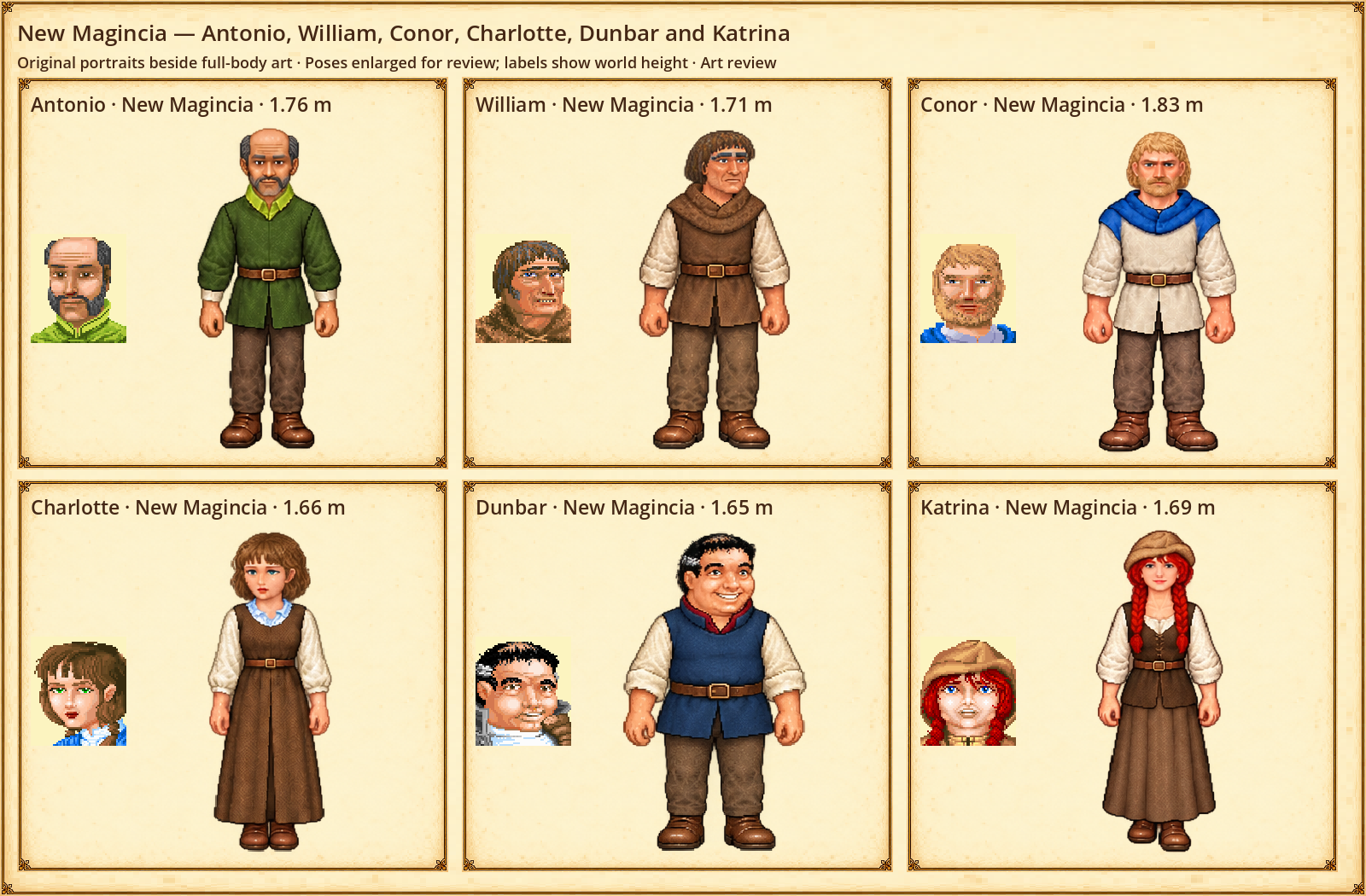
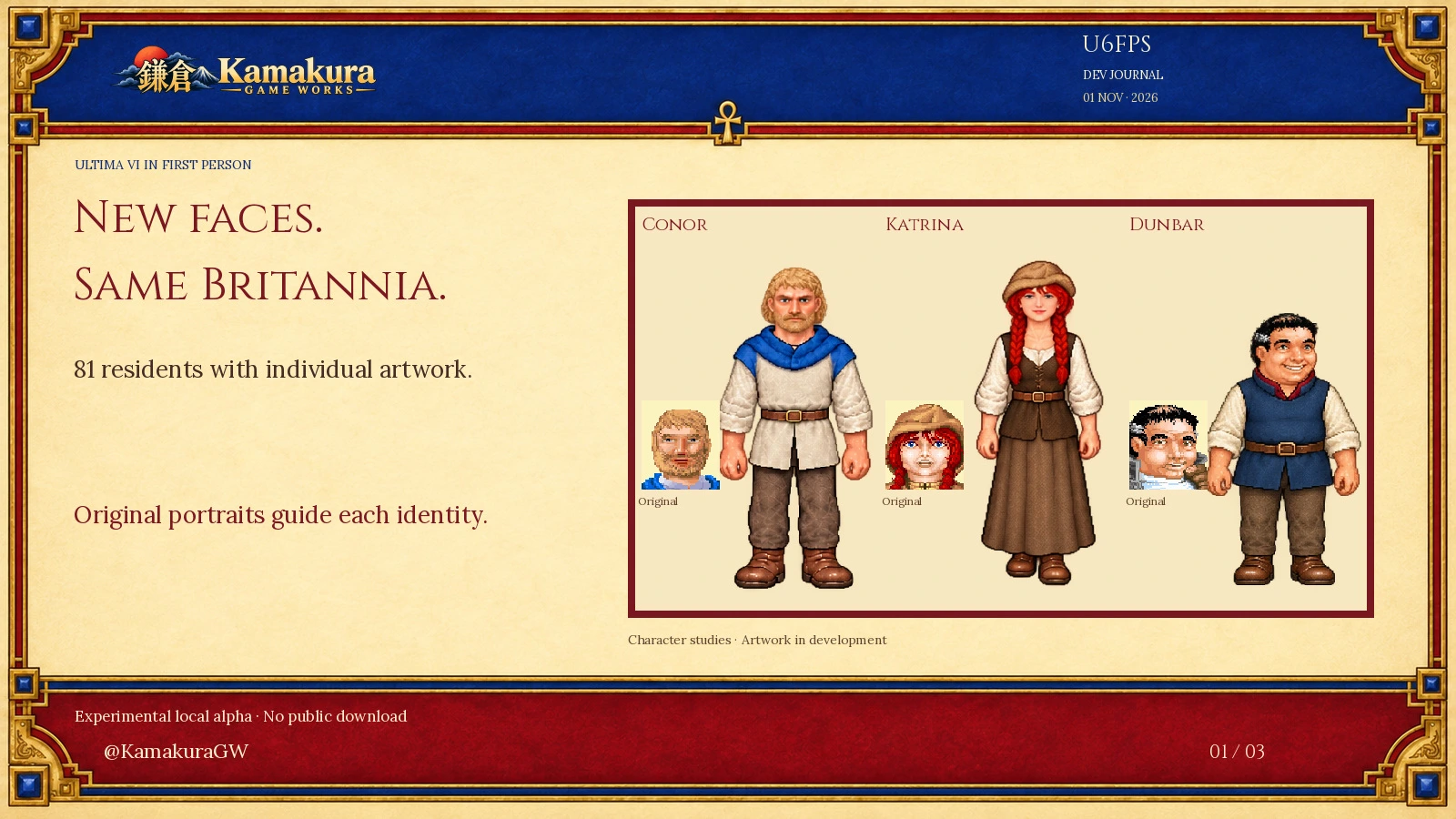
81 residents, guided by their original portraits
Fifteen batches now contain 81 residents with individual artwork and 1,296 indexed poses. The work covers Britain, Paws, Cove, Yew, Minoc, Trinsic, Skara Brae, New Magincia and surrounding areas. Each sheet provides four directions, standing idle, two walking poses and a seated pose, retaining its full resolution.
The latest batch adds Antonio, William, Conor, Charlotte, Dunbar and Katrina. Portrait comparisons guide faces, hair, visible colours and build; clothing beyond the portrait and metric heights are adaptations for the new perspective. This number describes the artwork catalogue, not completion of the population or campaign.
Katrina was also included in presentation tests inside and outside the party, retaining her identity and portrait. These check artwork continuity in simulated situations; actual recruitment, schedules and journeys through the towns still require their own validation.
Objects that belong in the scene
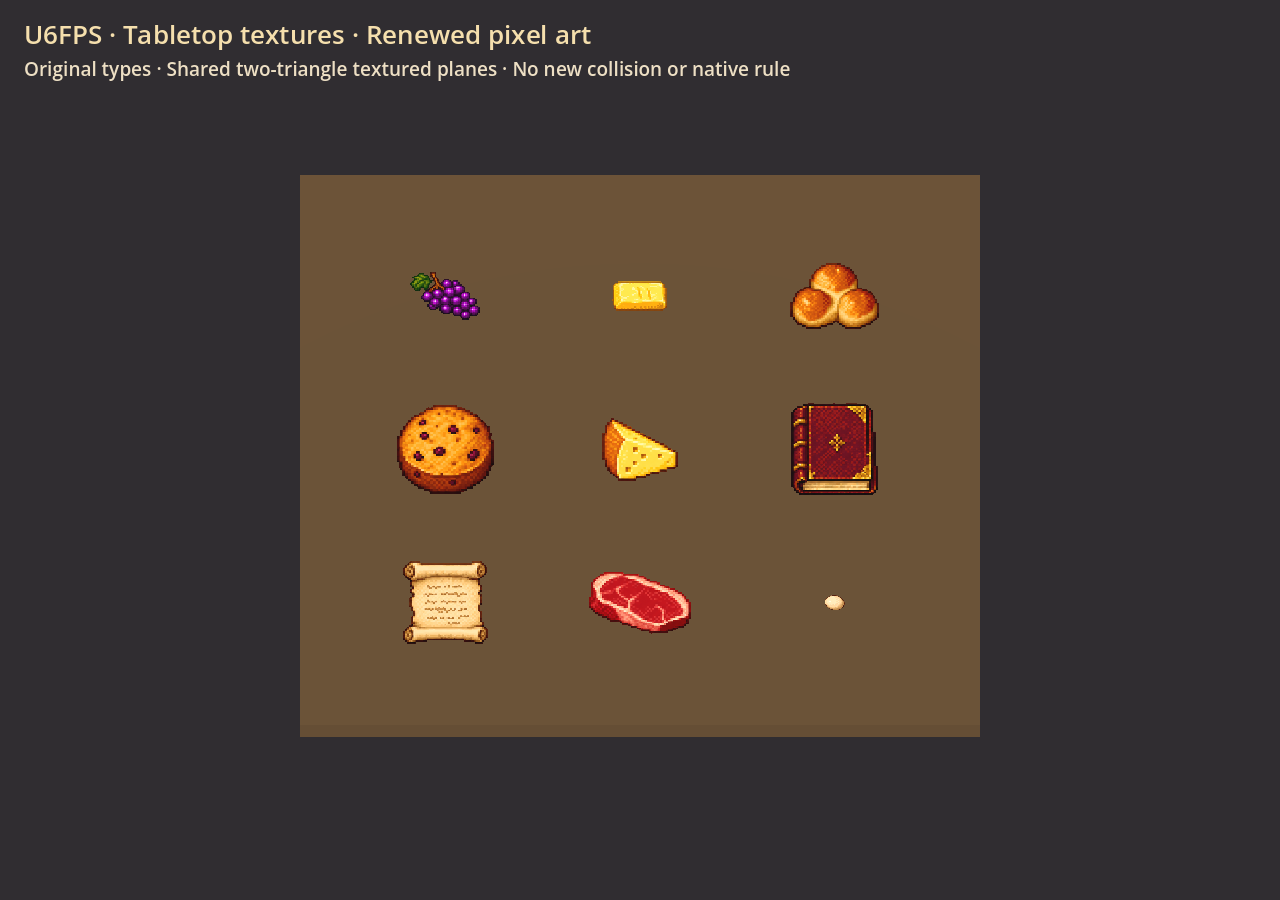
The approach to objects combines simple volumes with painted texture detail. The first batch includes 14 volumetric recipes, such as bottles, potions, plates, mugs and jugs, alongside images for weapons, tools and decoration.
The second batch adds nine images for grapes, butter, bread rolls, cake, cheese, a book, a scroll, meat and an egg. They rest on existing surfaces, preserve their scale and avoid duplicate visual ownership of the same object. Both Classic profiles keep the original graphics for these objects.
The new images were checked on 12 object records in the castle crop and nine in eastern Britain. Reviewing those regions does not establish coverage of every support, variation or state in the world.
What was checked — and what is still being built
The latest round passed 434 Python tests, 3,552 direction/posture combinations and 19 resting cases in Godot. The six New Magincia residents also passed 96 camera/profile cases, checking artwork restoration without altering the original records.
These are local checks. Real seats, schedules, individual combat and resting artwork, other object families and journeys with frequent profile switching remain pending. Movement and performance across the full world are still being monitored; this artwork batch does not announce a global smoothness fix.
The aim remains to adapt Ultima VI while preserving its original world, story, progression and rules. The project is still a local alpha, with changes in preparation and no public download at this stage.
Development images