Kamakura Game Works
← All news

ULTIMA VI - ENHANCED EDITION ·

Ultima VI - Enhanced Edition: a new chapter

It began with a question: what would it feel like to walk through Britannia in first person? Development brought other perspectives, visual options and ways to interact with the game. The project adopts the name Ultima VI - Enhanced Edition (U6EE) — a name that reflects this wider direction.

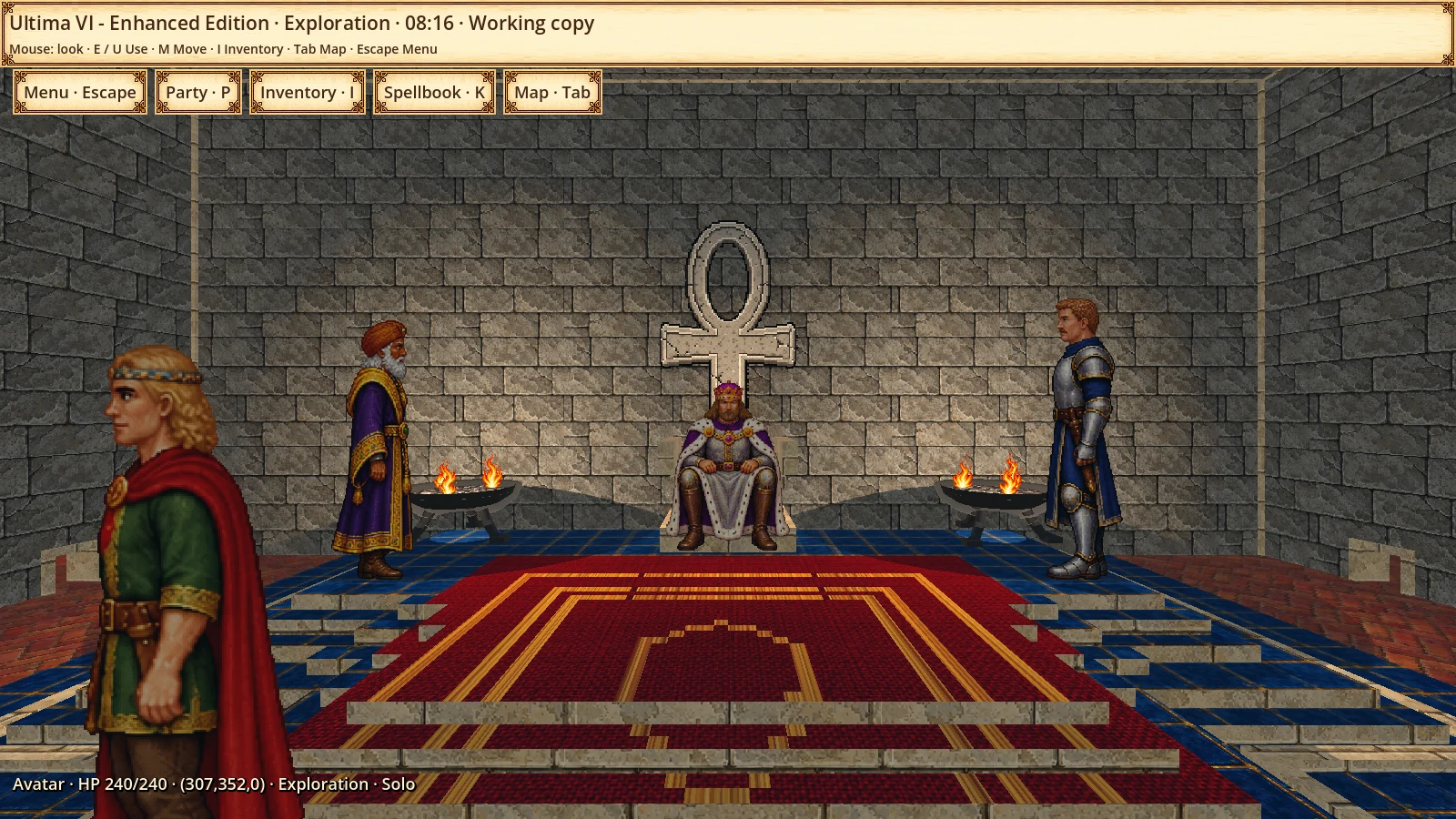
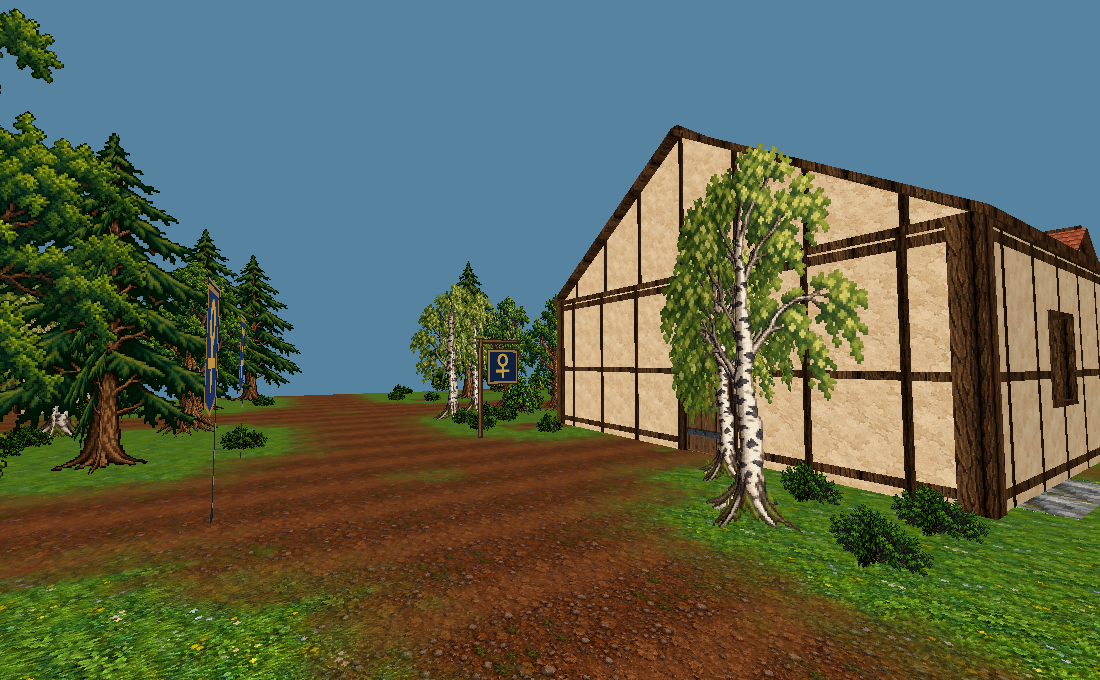
First person

First person

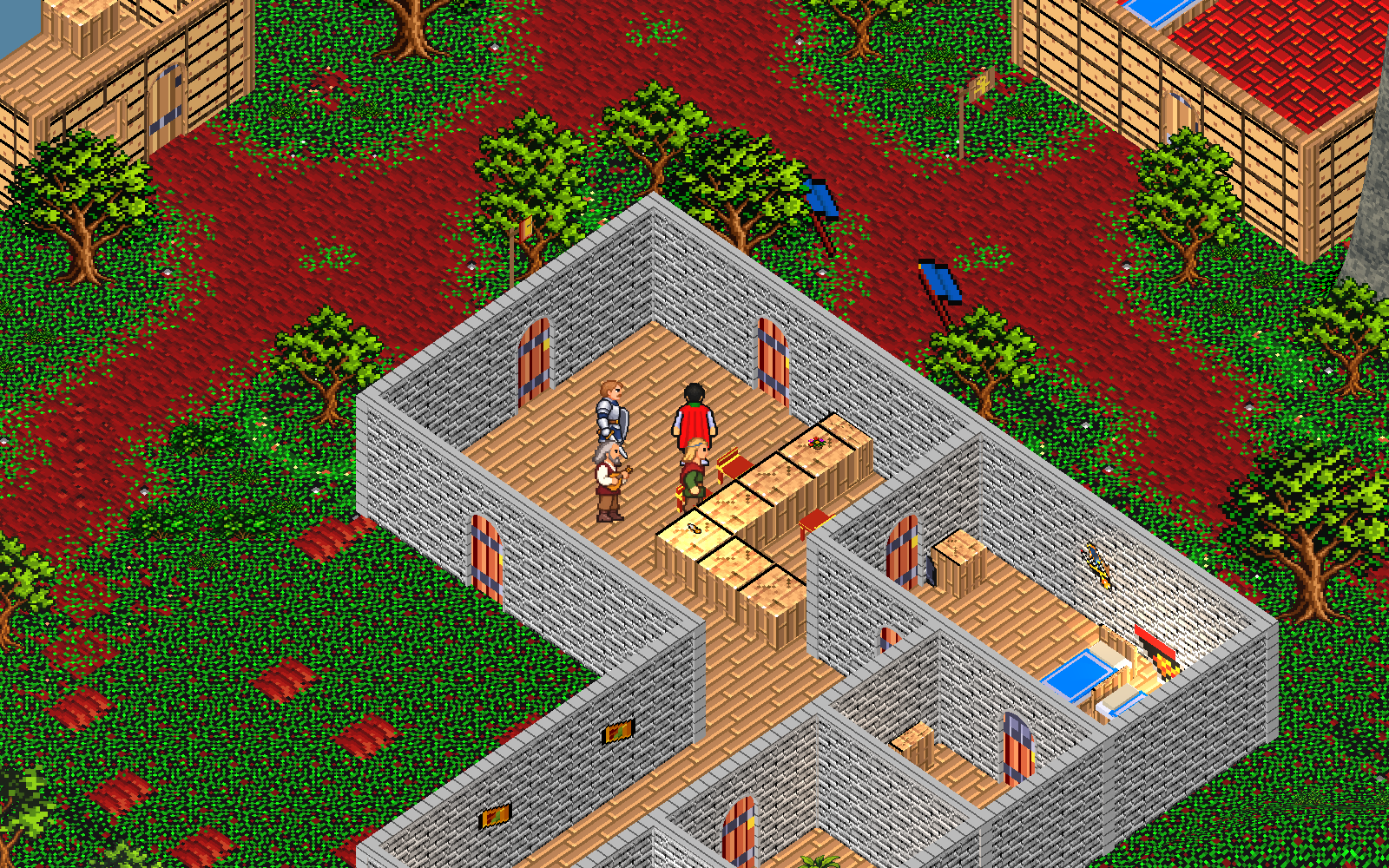
Isometric camera

Isometric

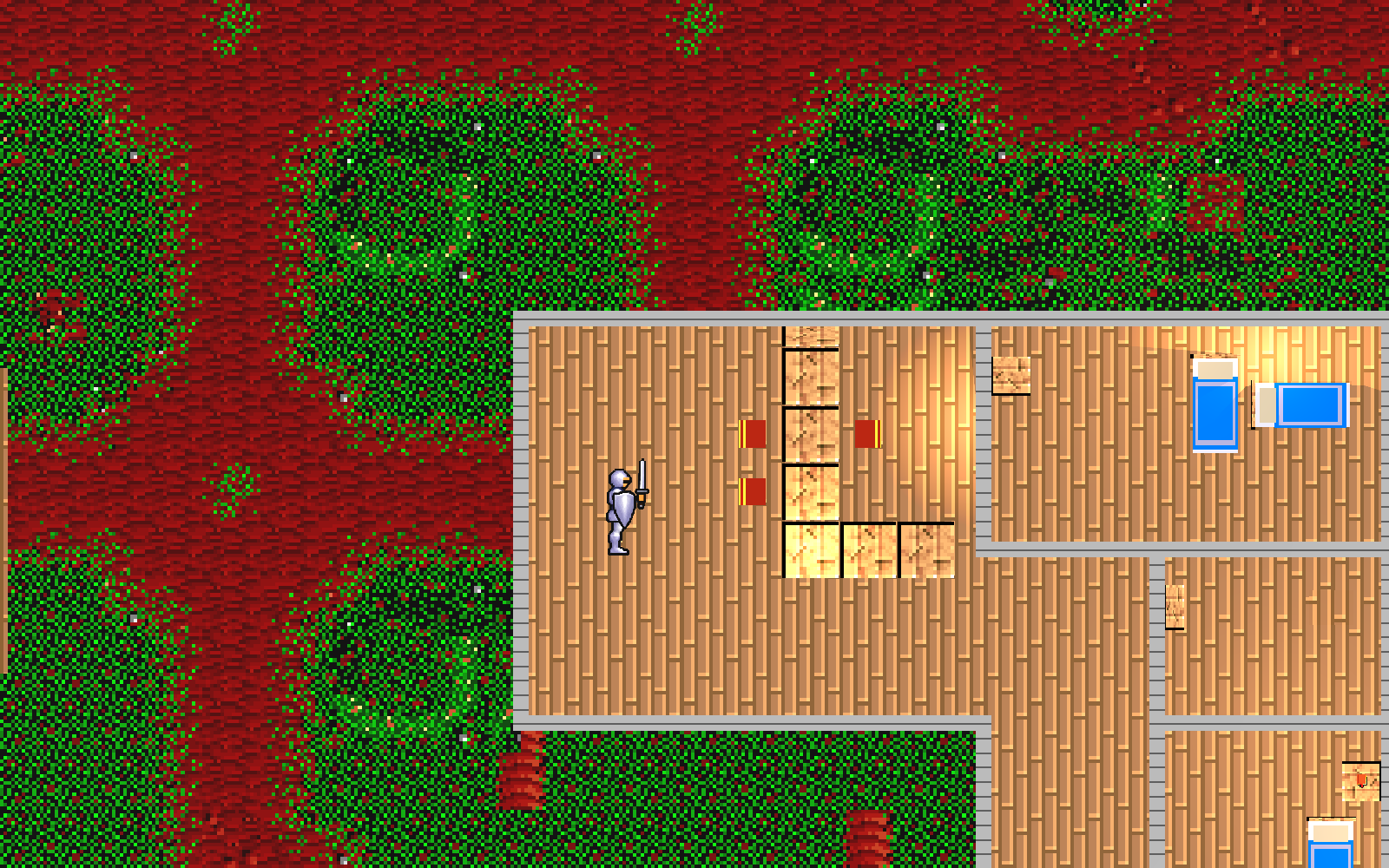
Top view

Top down

Ultima VI oblique camera

Oblique · Ultima VI

From first person to more ways to play

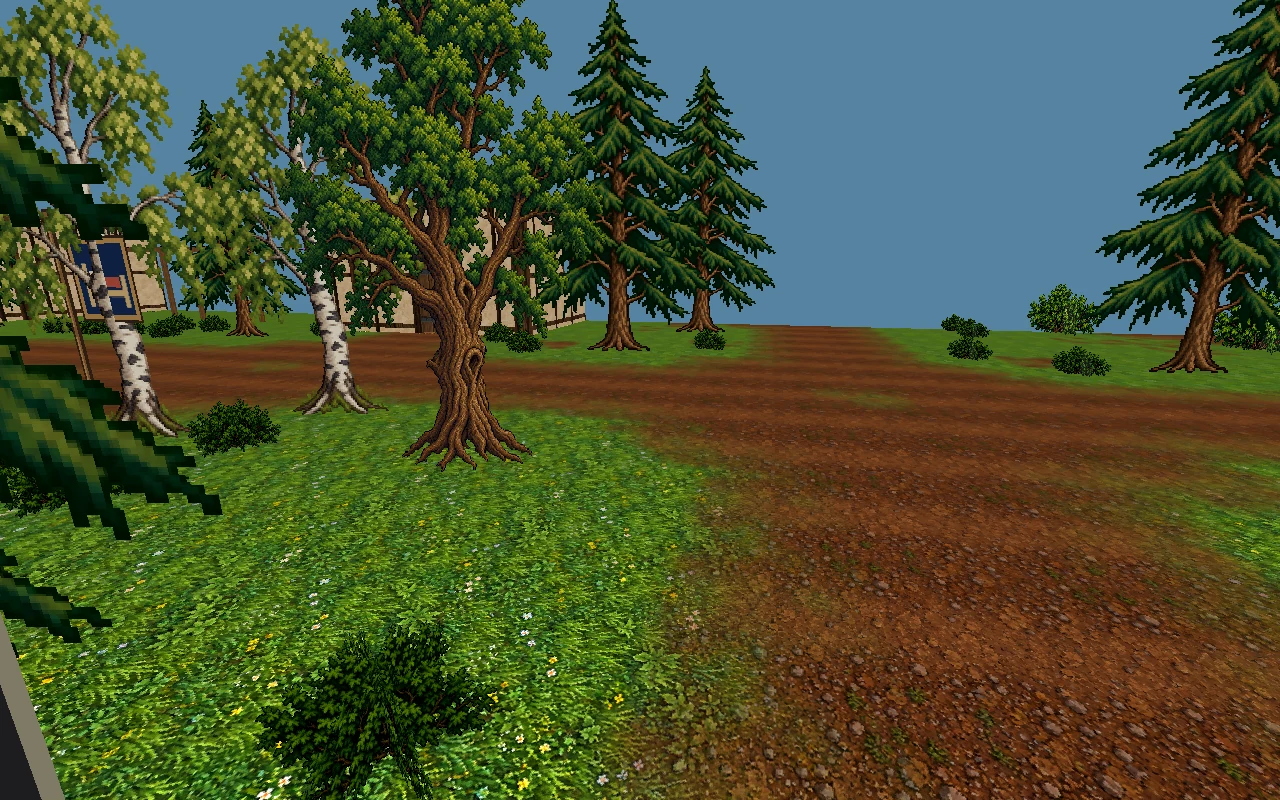
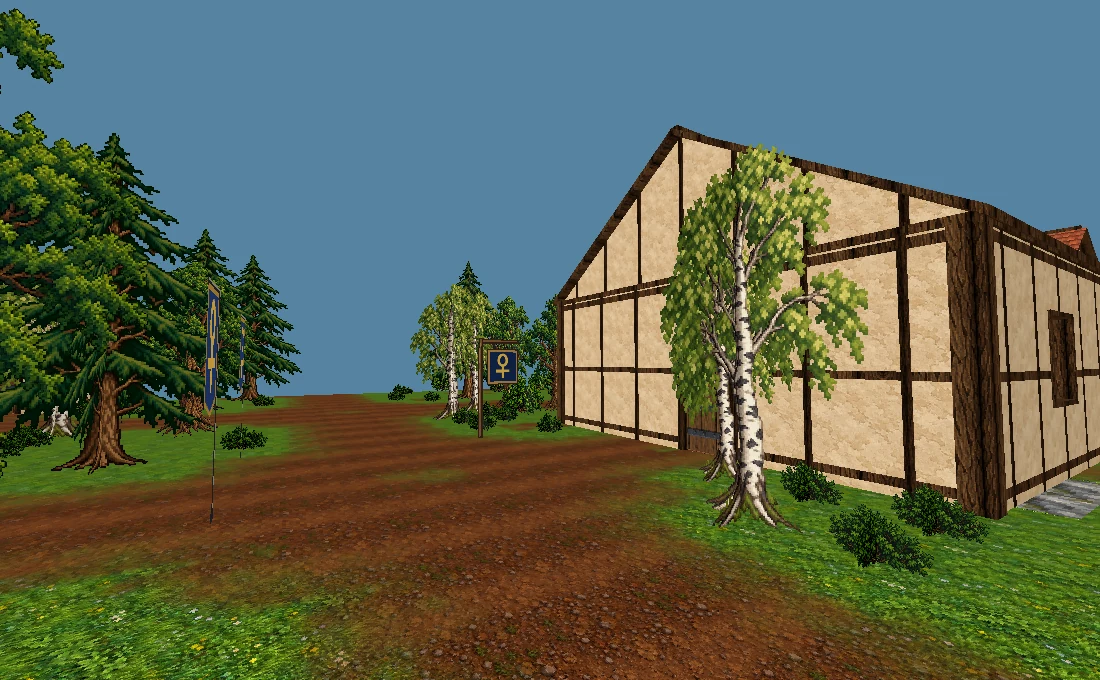
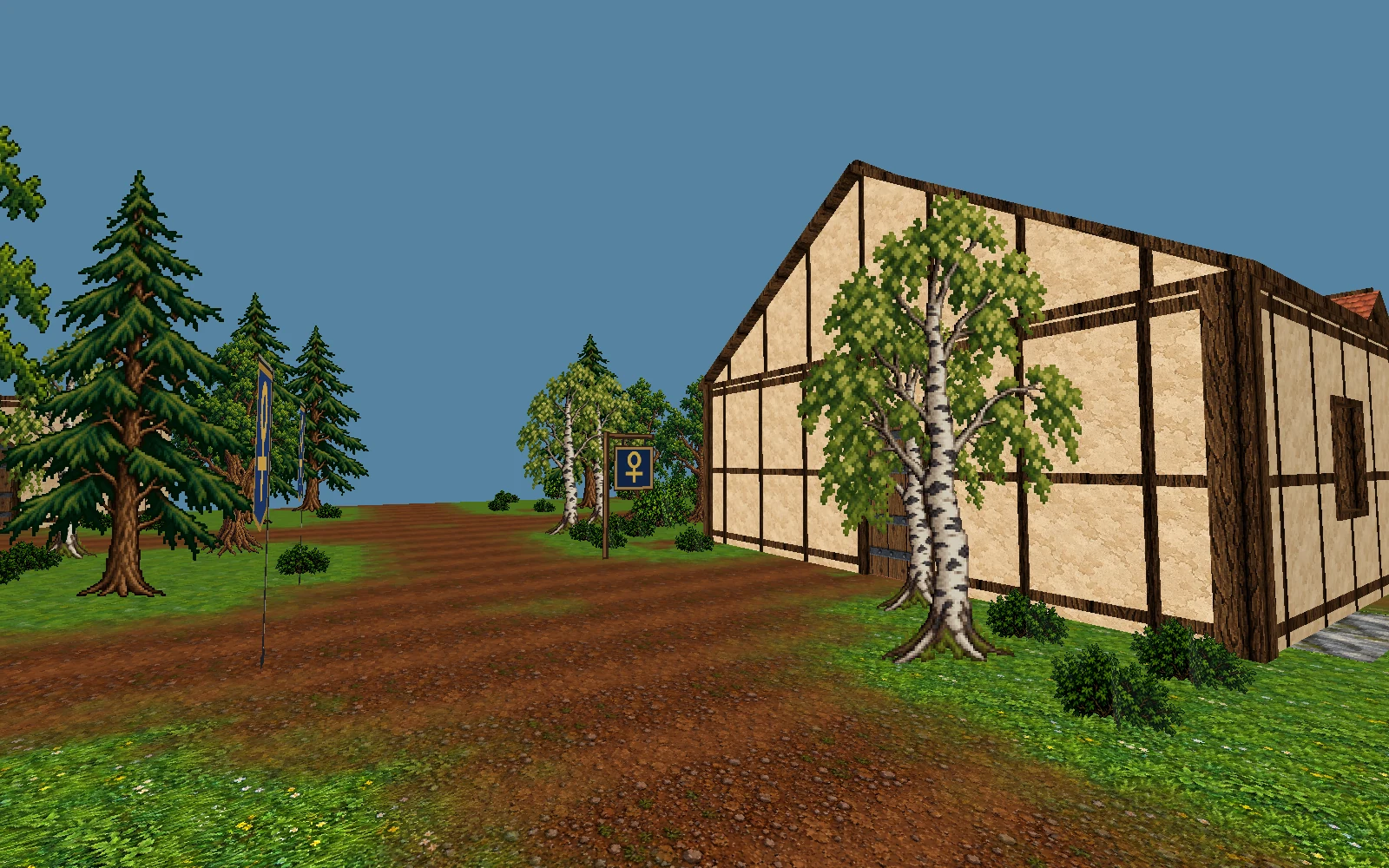
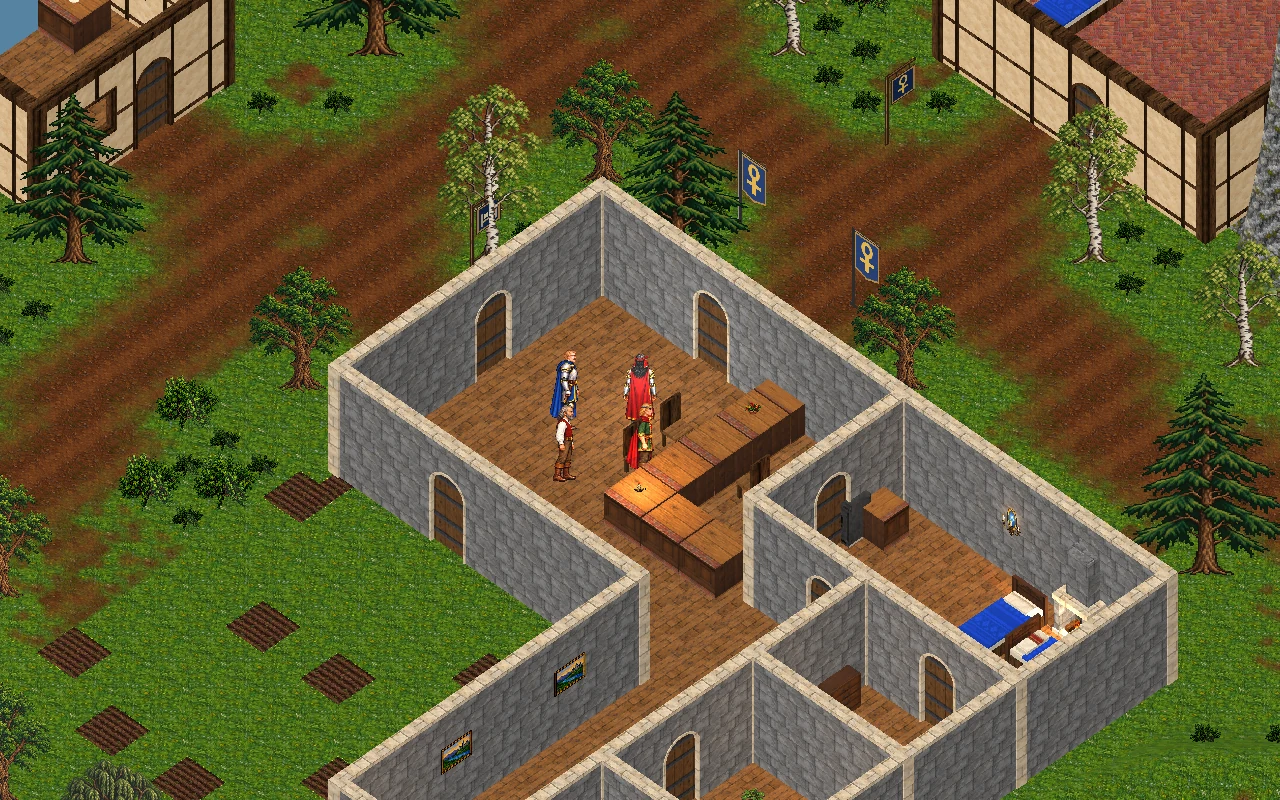
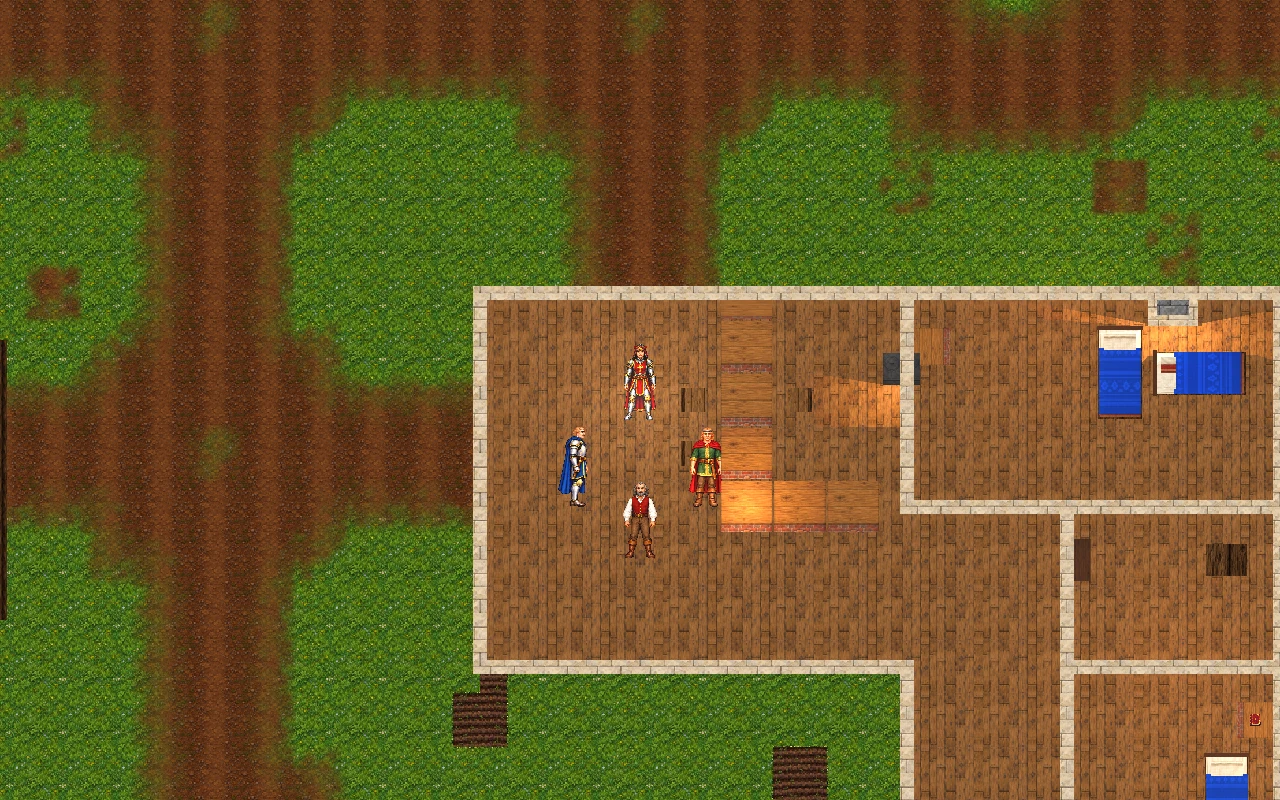
First person places the camera at eye level. Isometric shows the scene diagonally from above. Top down looks straight down without tilt. Ultima VI oblique keeps the floor nearly aligned with the screen while revealing part of the walls. These are four separate options, available from the menu or the remappable F7 shortcut; the overhead cameras also offer rotation and zoom.
First person

First person

At eye level

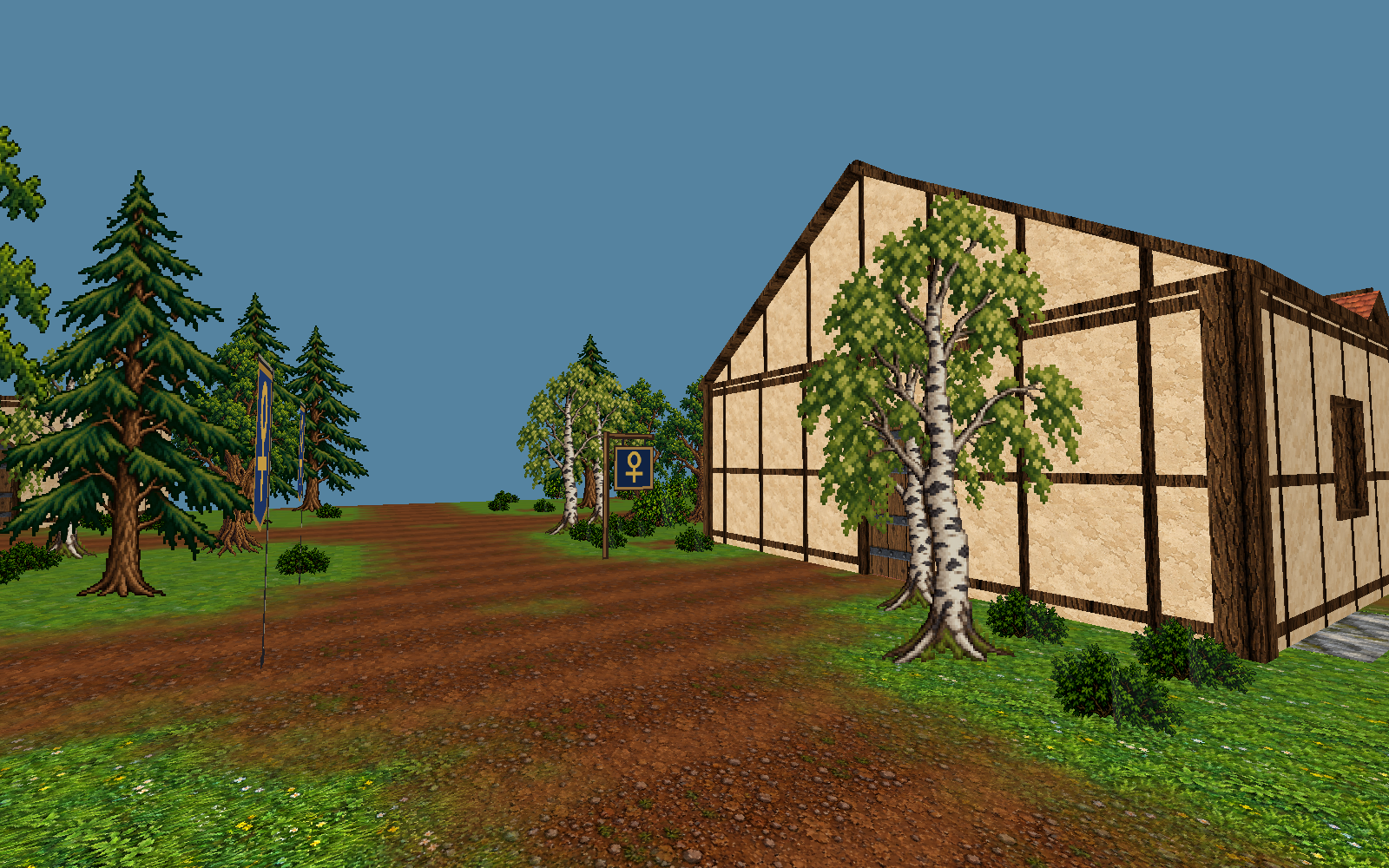
See through the character’s eyes, with perspective and walls around you.

First-person perspective in the Renewed profile. Skara Brae presentation scene.
Isometric camera

Isometric

Elevated diagonal view

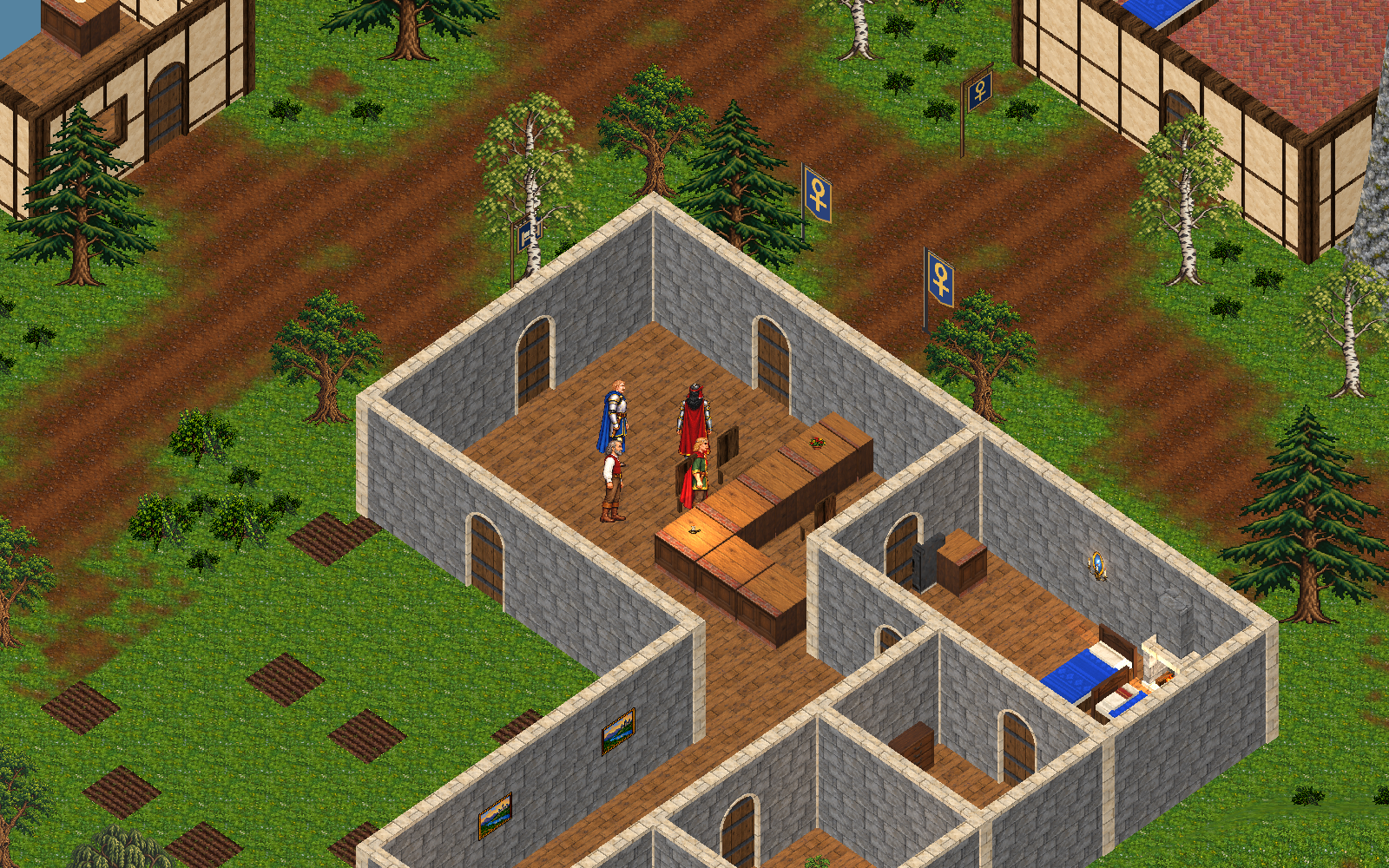
Look diagonally across the scene, seeing floors and two sides of buildings. This camera uses orthographic projection.

Diagonal framing over the same Skara Brae area. Characters use presentation positions.
Top view

Top down

Straight overhead

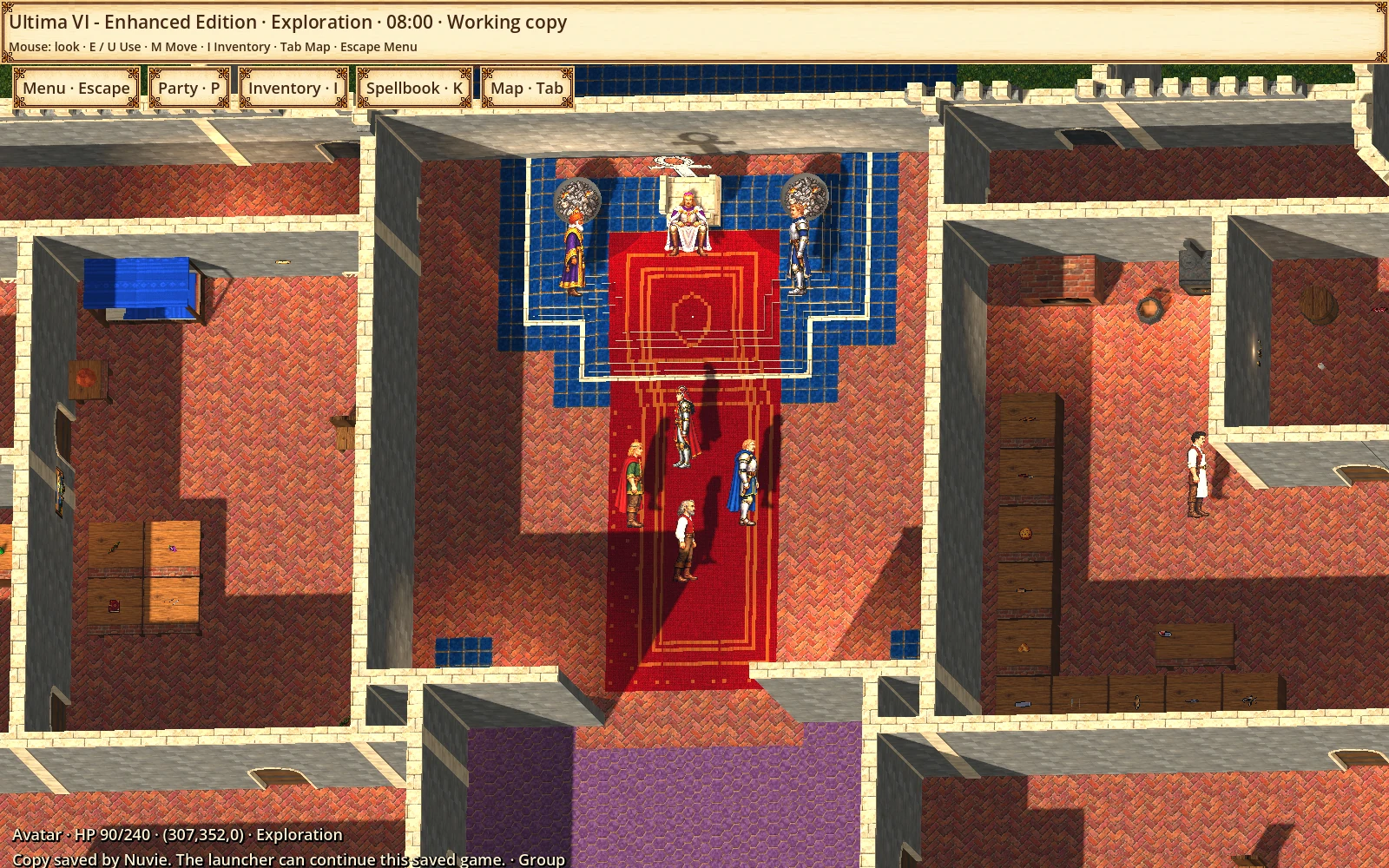
Look straight down at the map, without tilt. Floors take prominence and vertical wall faces are barely visible.

Fully overhead camera with roofs hidden to reveal the interiors.
Ultima VI oblique camera

Oblique · Ultima VI

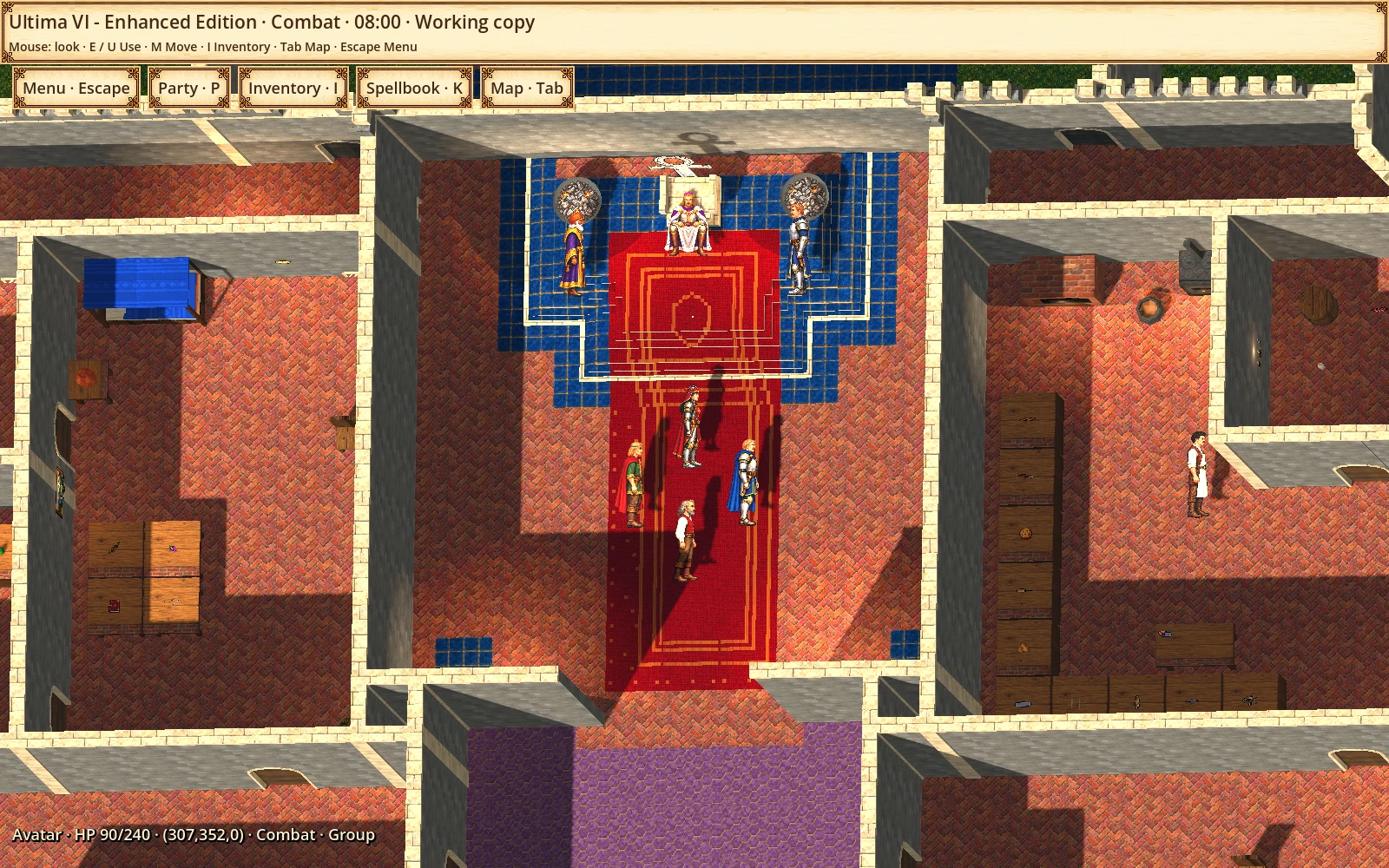
Aligned floors, visible walls

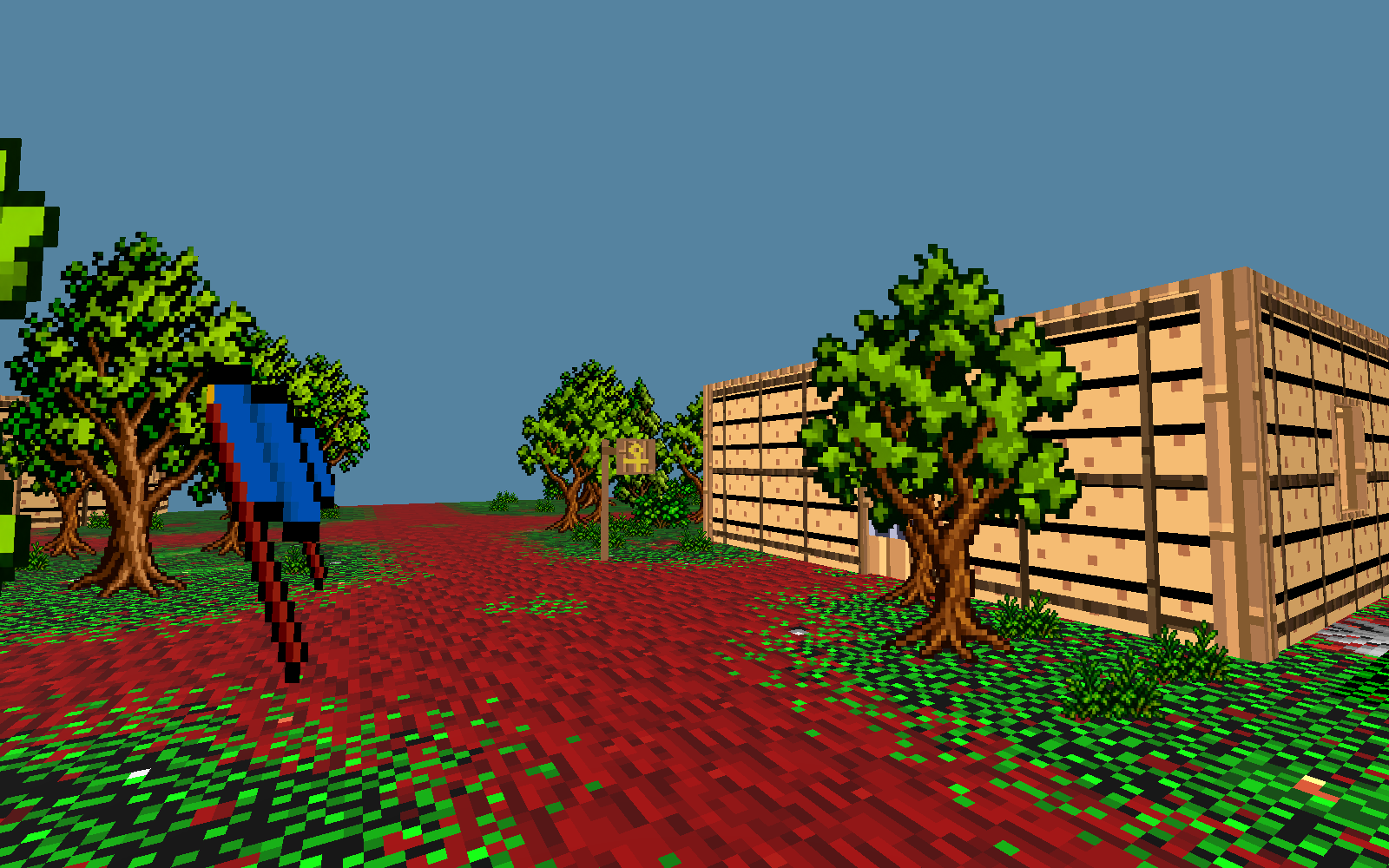
A tilted view that keeps floors nearly aligned with the screen while revealing part of the walls, bringing the framing closer to the original.

Elevated view with nearly screen-aligned floors and visible wall faces. Capture from an original-engine test session.

The aim is to let players choose how they view the same world. Camera, visual profile and movement are presentation options. The goal of preserving Ultima VI’s map, story, progression and rules through Nuvie remains. The current camera views the 3D world; matching the DOS presentation and handling wall occlusion still need refinement.
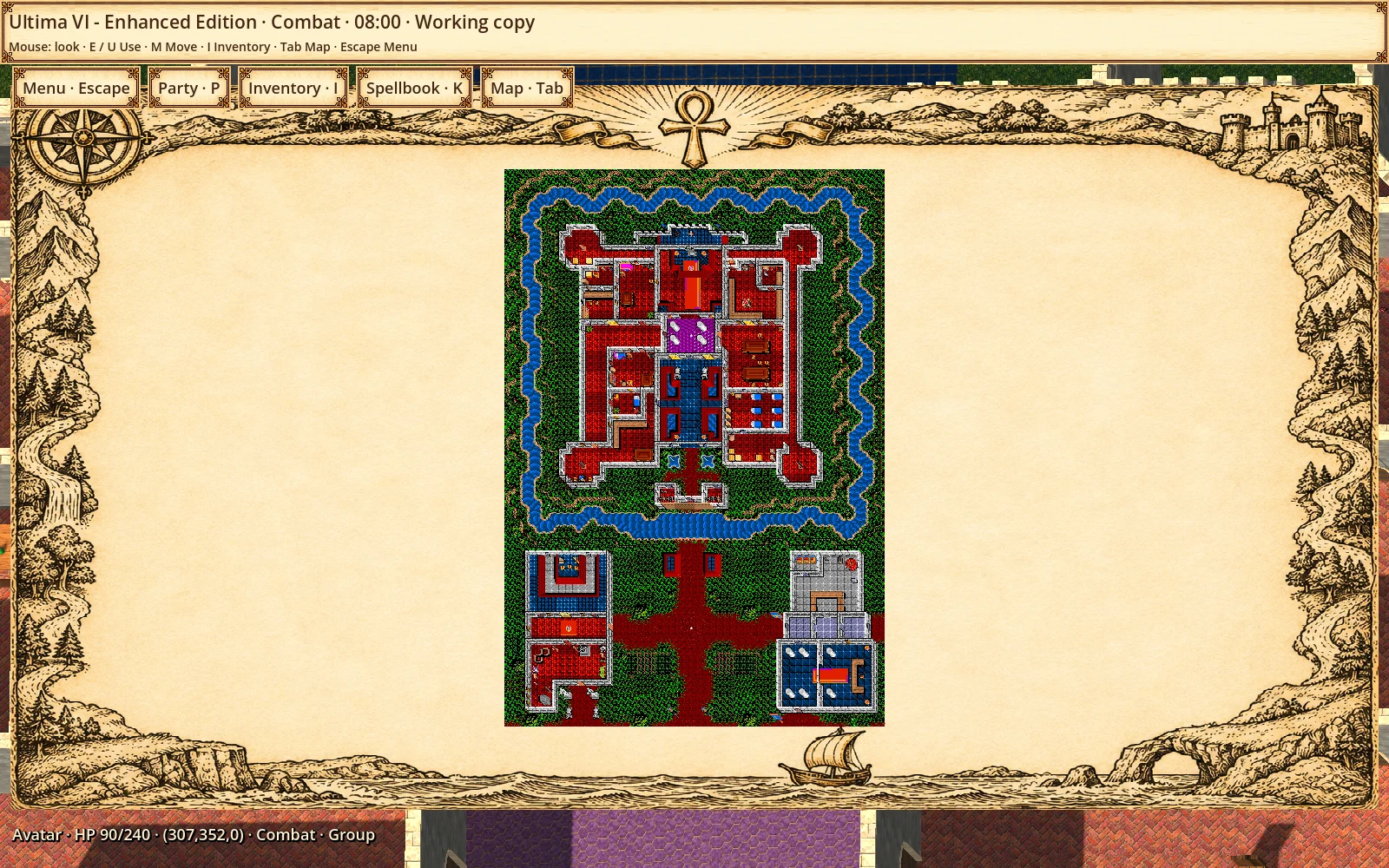
Map and travel frame
Map and travel frameLocal map of the castle and its surroundings in the travel interface.
See 2 more visual examples
Ultima VI oblique camera
Oblique · Ultima VIElevated view with nearly screen-aligned floors and visible wall faces. Capture from an original-engine test session.
Underground ladder
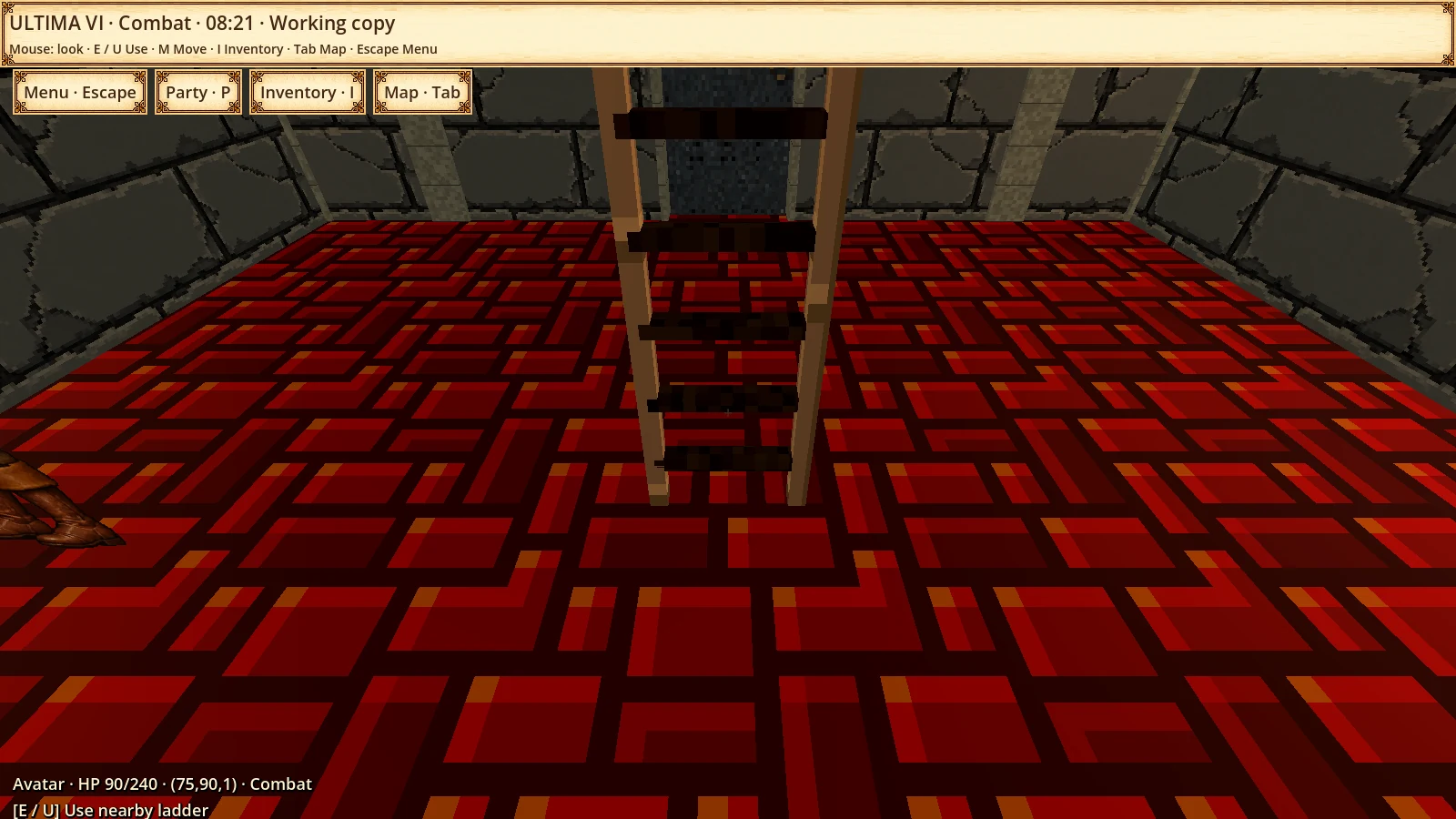
Underground ladderEarlier alpha capture in an underground area reached through the original engine.

Three looks, one journey through Britannia

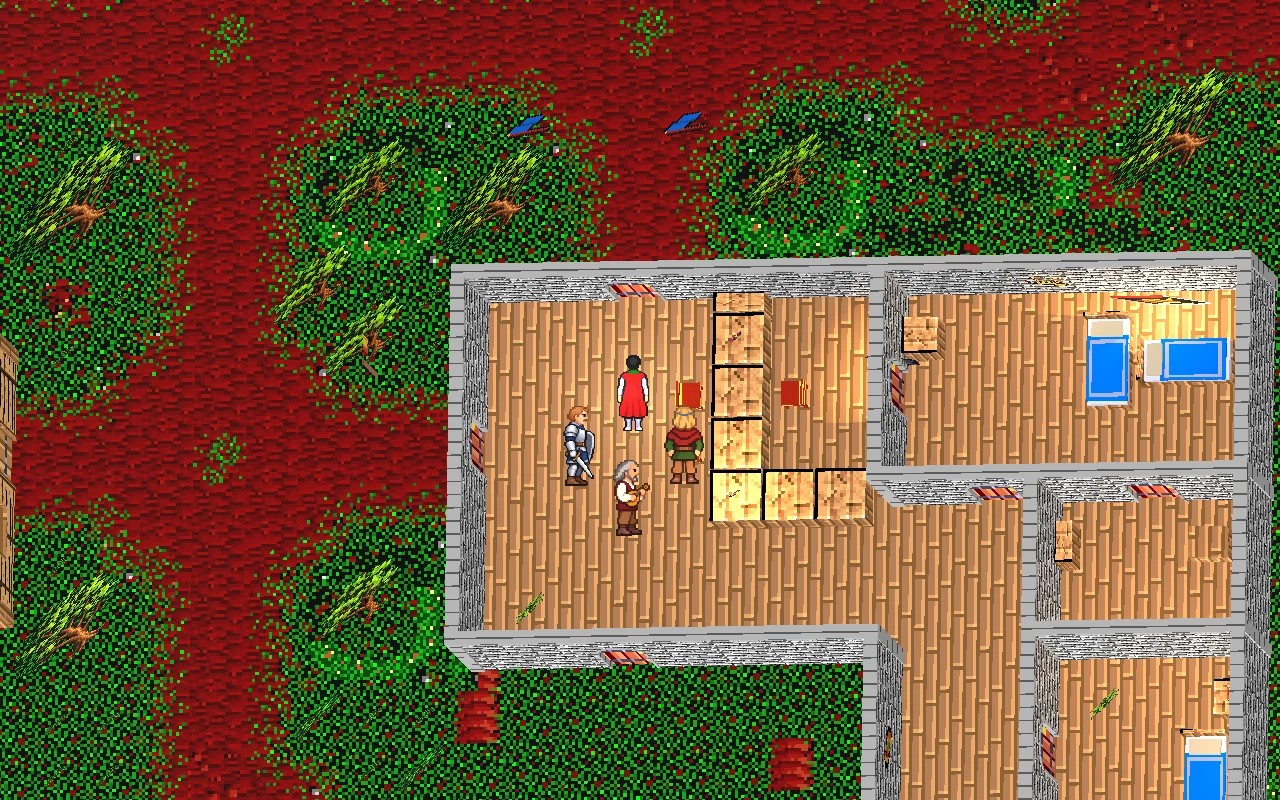
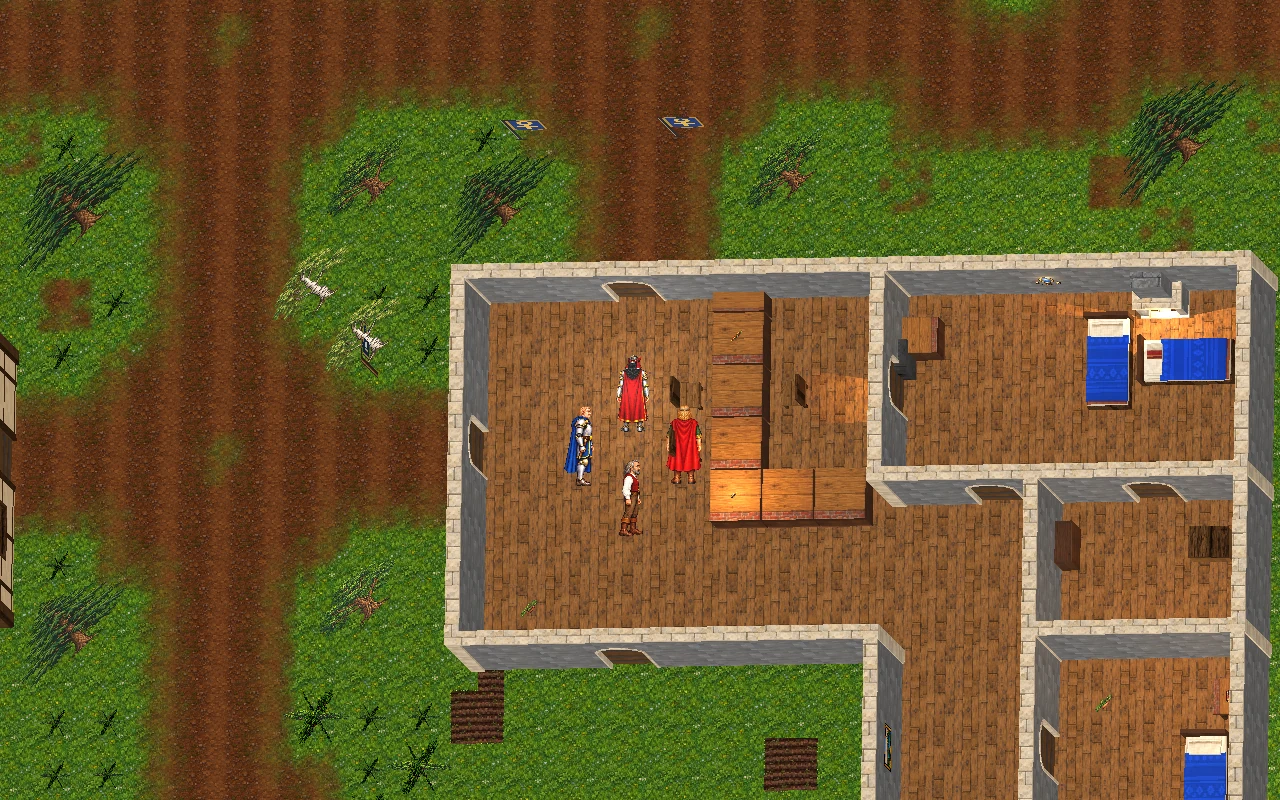
Classic draws on the original artwork, adapted for upright characters and readable objects in the new perspective. Classic+ combines this foundation with additional finishing details and a growing collection of individual artwork. Modern develops higher-definition sprites and materials while retaining a pixel-art direction.
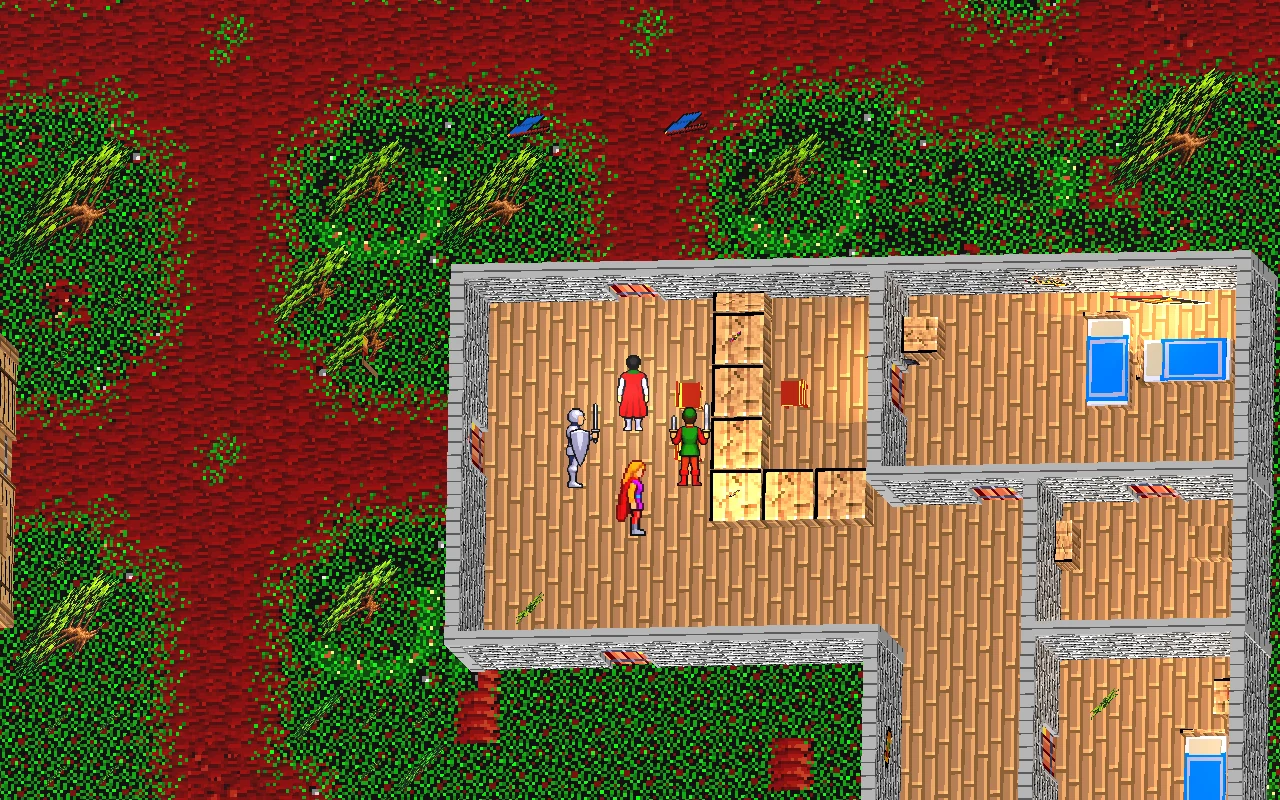
Classic profile
Classic profileThe same location and framing in the Classic profile. Presentation scene with test positions.
See 2 more visual examples
Classic+ profile
Classic+ profileThe same location and framing in the Classic+ profile. Presentation scene with test positions.
Renewed profile
Renewed profileThe same location and framing in the Renewed profile. Presentation scene with test positions.

Profiles can be changed without starting another game. Grid or free movement can also be selected. These art collections are still in development: not every character, creature, object or state has a finished version in all three modes. The website’s intermediate gallery includes visual studies; that does not mean every study is integrated into the game.
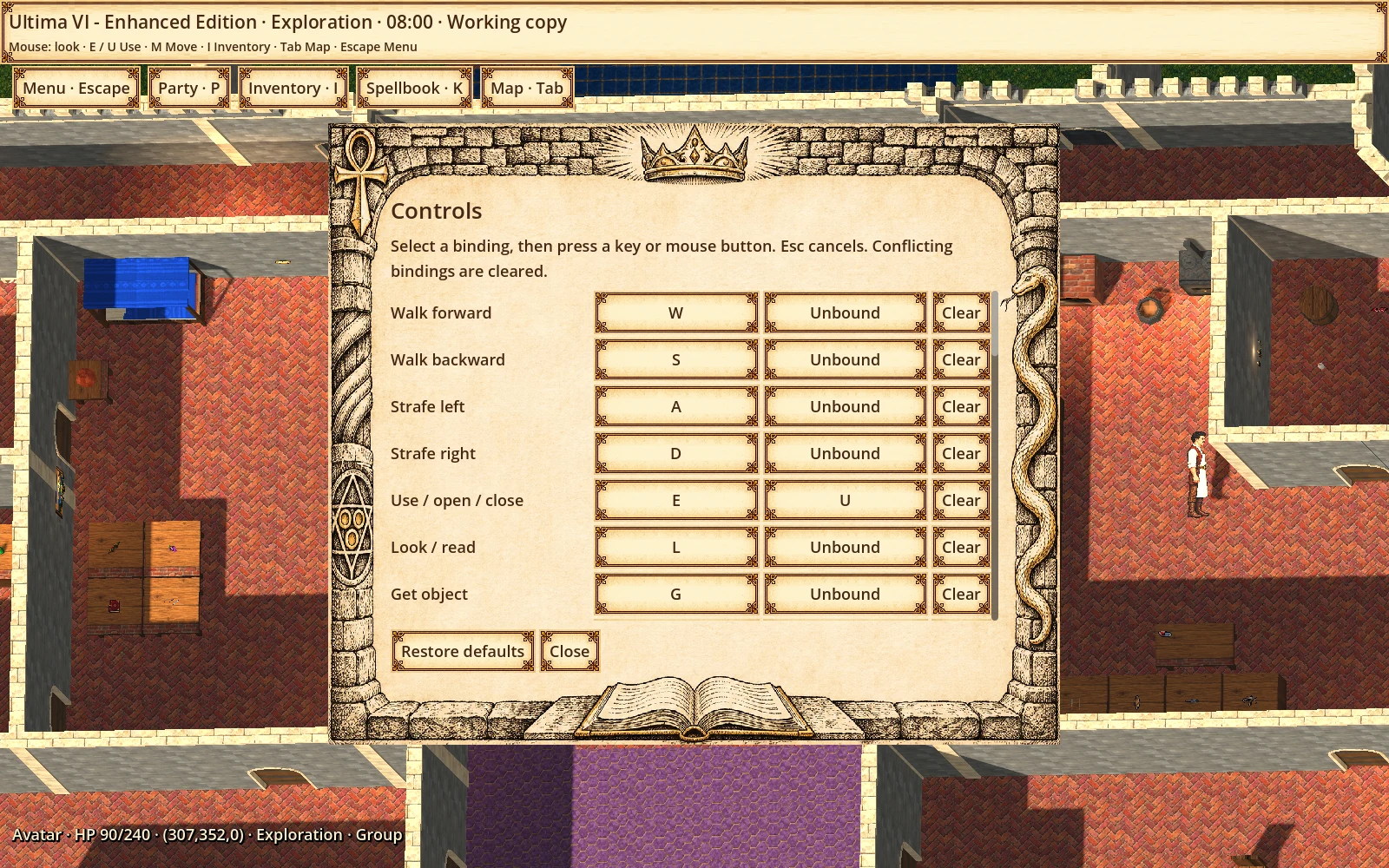
Remap movement and interactions
Remap movement and interactionsCurrent controls window with remappable movement, Use and other actions.
See 2 more visual examples
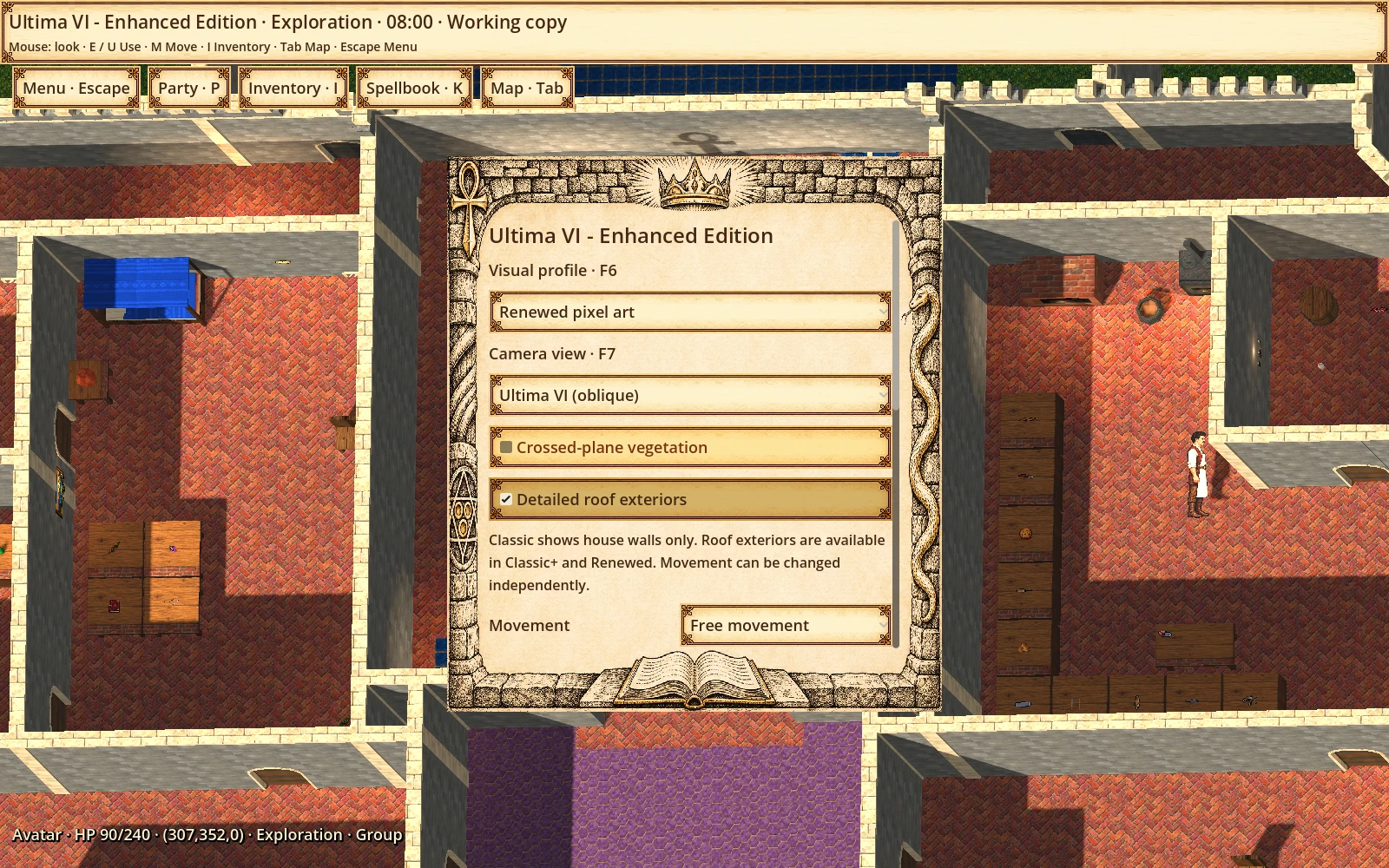
Profiles, camera and free movement
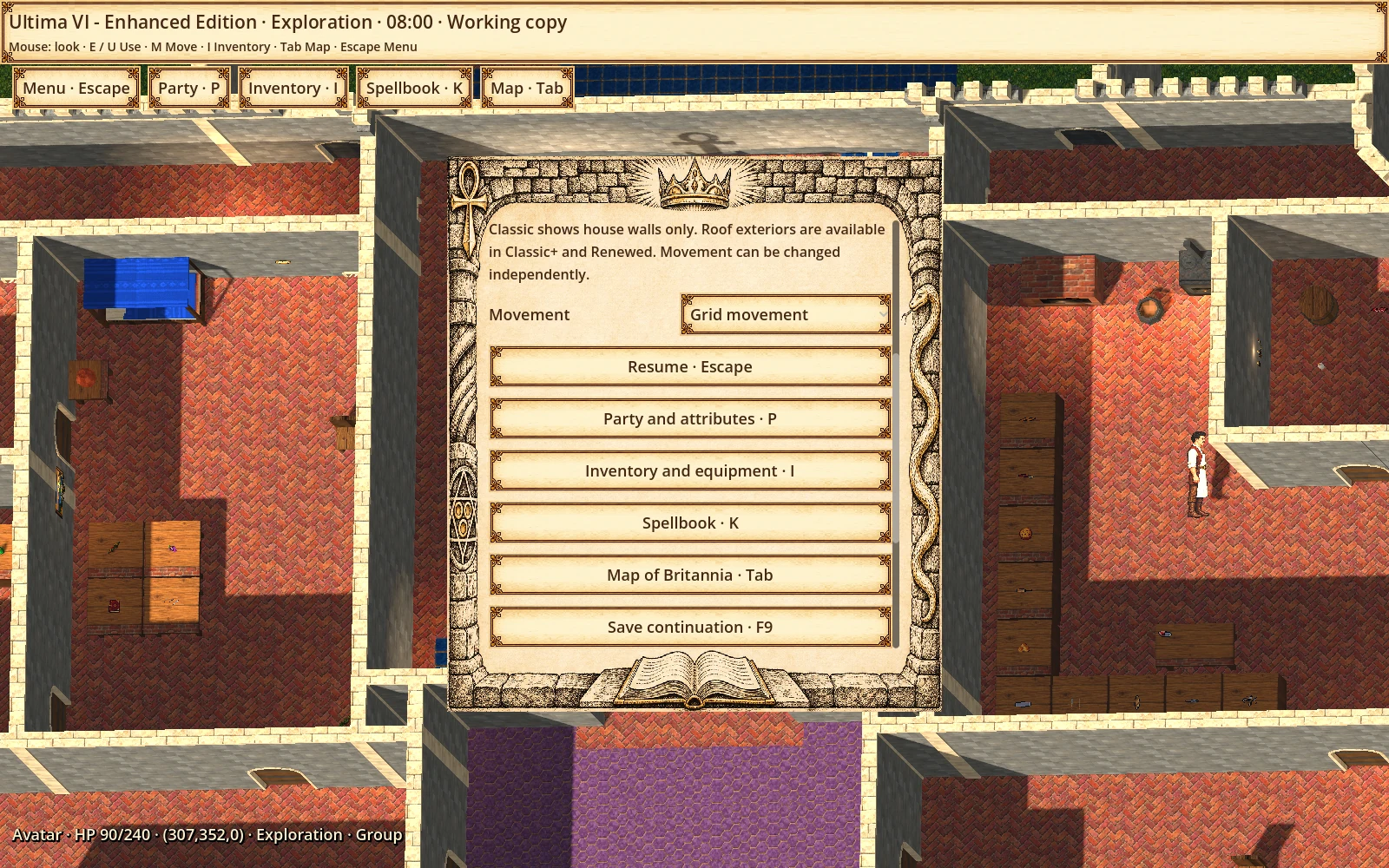
Profiles, camera and free movementIndependent presentation and movement options without starting another game.
Grid movement selected
Grid movement selectedThe same menu with Grid selected; the manual save button remains available.

Familiar faces and an evolving world

Classic sprites retain the original shared body types. Personalised versions use portraits to guide identity, hair, clothing and visible colours. The galleries let you compare this work across characters, monsters, animals and plants.
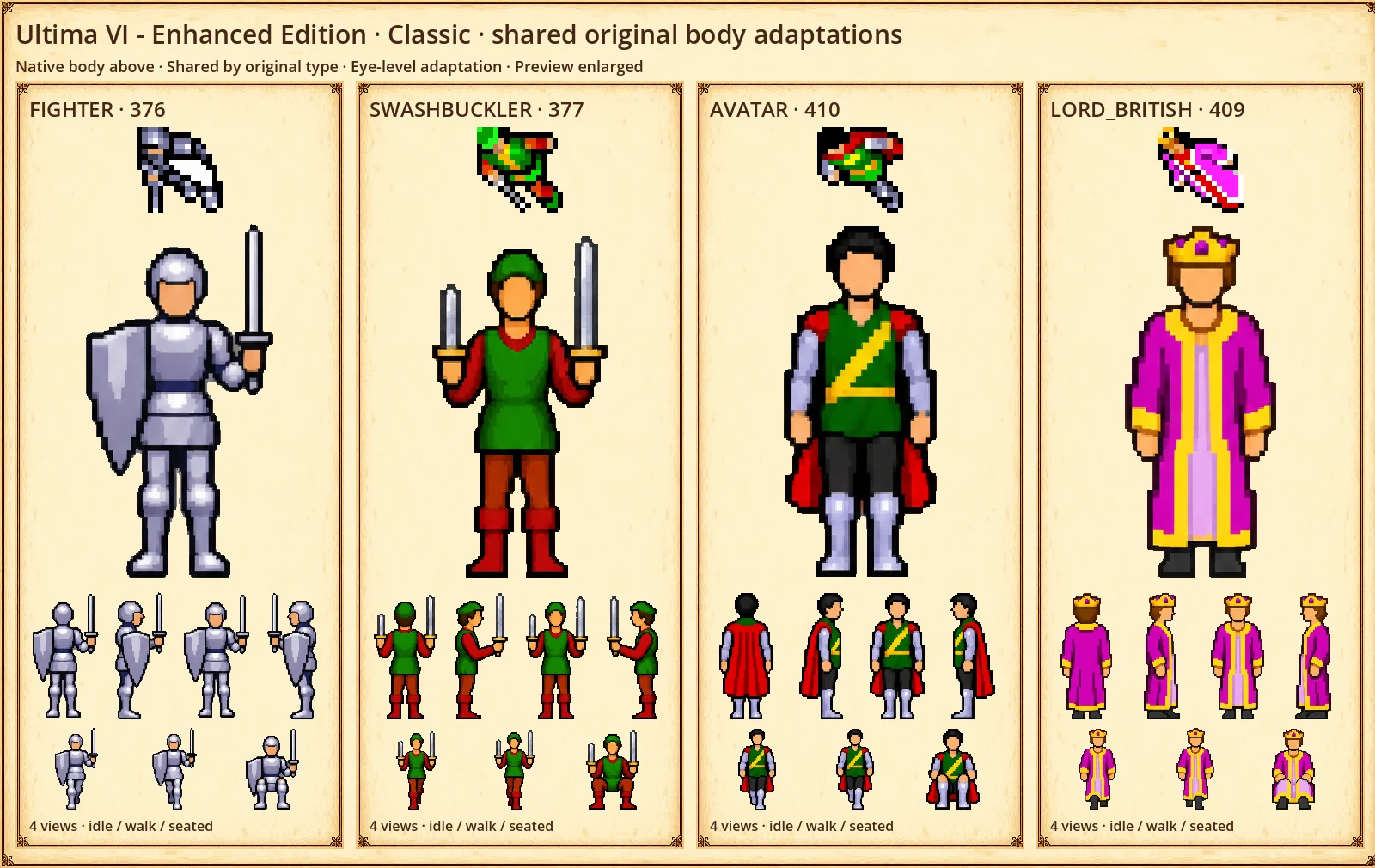
Fighter, Swashbuckler, Avatar and Lord British
Fighter, Swashbuckler, Avatar and Lord BritishComparison of the original bodies with four revised Classic adaptations and their poses.

Local world revisions cover mountains beside buildings, counters, seats, doors, corners and roofs. Paths and banks follow native tile contours. Crossed-plane vegetation now has its own menu option, allowing its volume to be compared with the previous presentation. These improvements do not finish the review of every region.
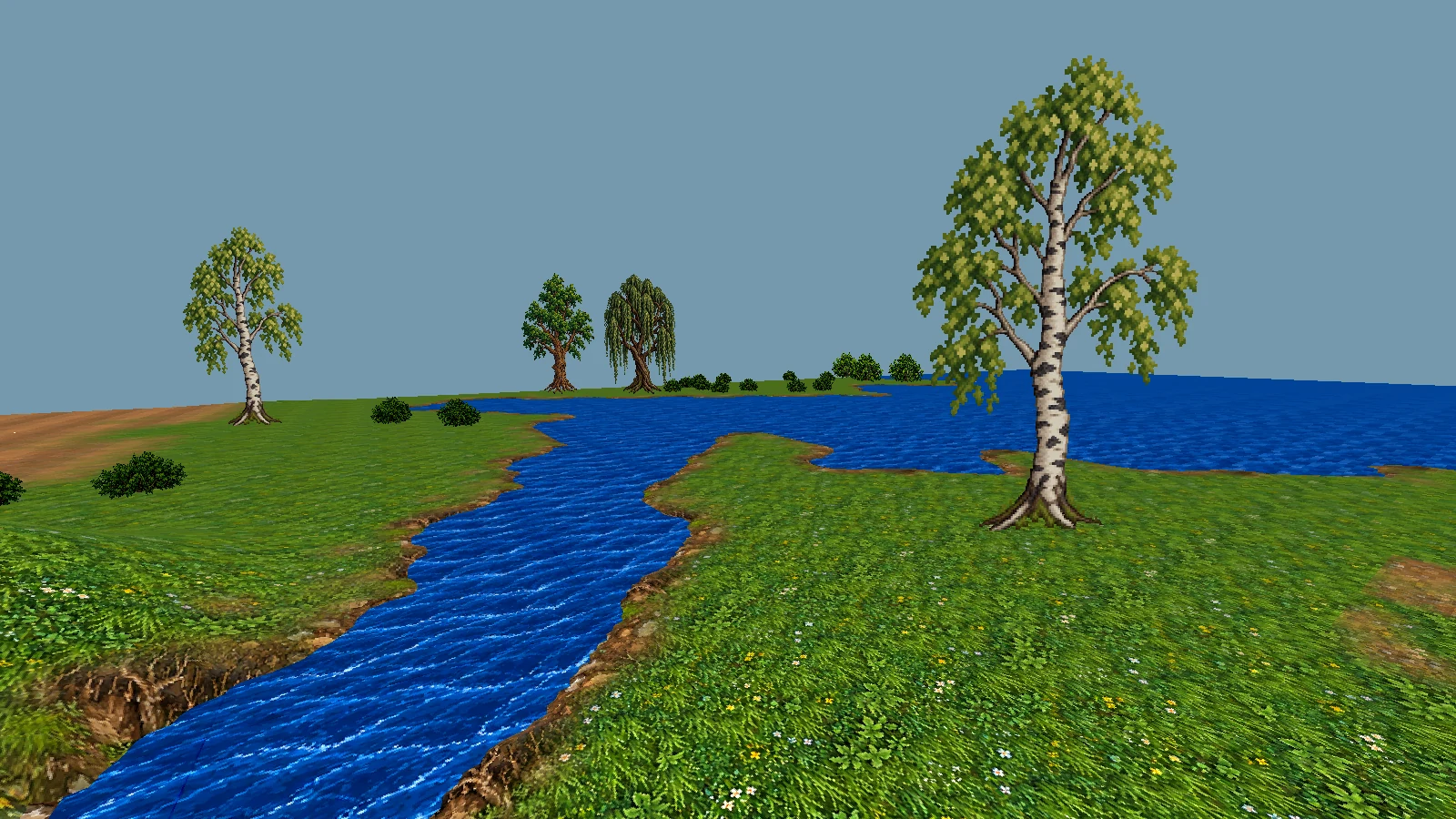
Banks following the original terrain
Banks following the original terrainExample of adapted banks following the native tile contours.
See 2 more visual examples
Roads and materials
Roads and materialsExample of the revised road material in the Skara Brae area.
Crossed-plane vegetation
Crossed-plane vegetationExample of the crossed-surface option applied to Renewed vegetation. Presentation scene.

Features and improvements in the current base

Camera

Four cameras, four different views

First person, isometric, top down and oblique. Camera selection is independent of the visual profile and movement mode.

First person

First person

Isometric camera

Isometric

Top view

Top down

Ultima VI oblique camera

Oblique · Ultima VI

Graphics

Classic, Classic+ and Modern

Three presentation profiles, switchable within the same game.

Classic profile
Classic profileThe same location and framing in the Classic profile. Presentation scene with test positions.
See 2 more visual examples
Classic+ profile
Classic+ profileThe same location and framing in the Classic+ profile. Presentation scene with test positions.
Renewed profile
Renewed profileThe same location and framing in the Renewed profile. Presentation scene with test positions.
Movement

Grid or free movement

Choose a movement style and remap the controls.

Remap movement and interactions
Remap movement and interactionsCurrent controls window with remappable movement, Use and other actions.
See 2 more visual examples
Profiles, camera and free movement
Profiles, camera and free movementIndependent presentation and movement options without starting another game.
Grid movement selected
Grid movement selectedThe same menu with Grid selected; the manual save button remains available.
Characters

Sprites and portraits

Adapted native body types, portrait-guided identities and comparison galleries.

Fighter, Swashbuckler, Avatar and Lord British
Fighter, Swashbuckler, Avatar and Lord BritishComparison of the original bodies with four revised Classic adaptations and their poses.
Dialogue

Portraits and keywords

EN/PT-BR interface; original campaign dialogue remains in English.
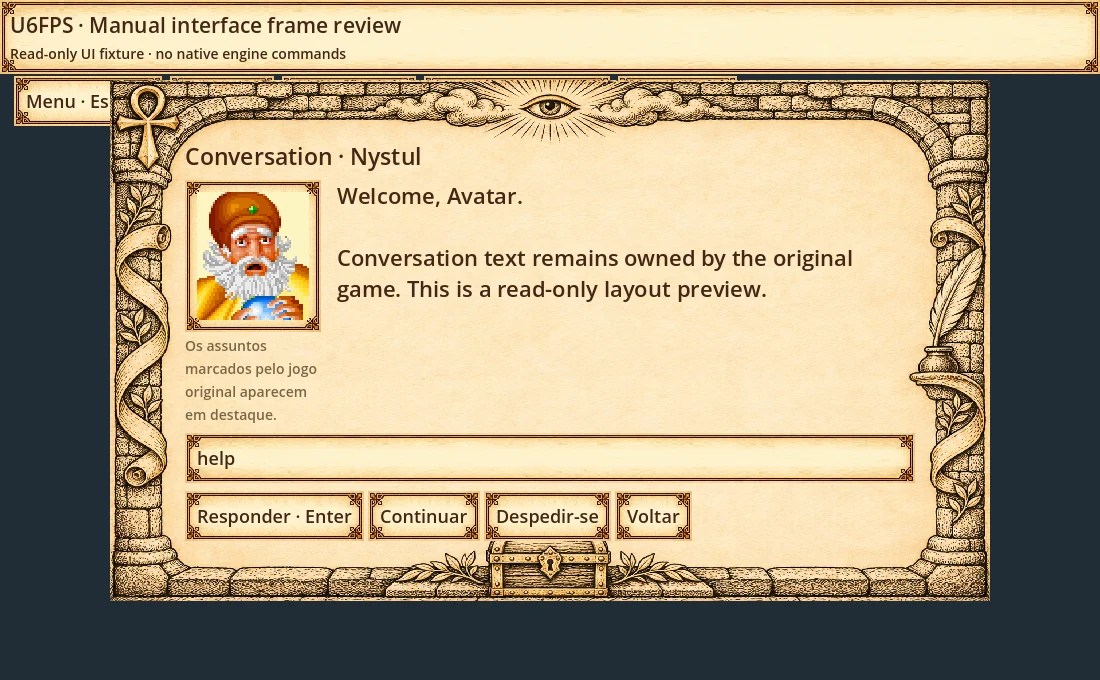
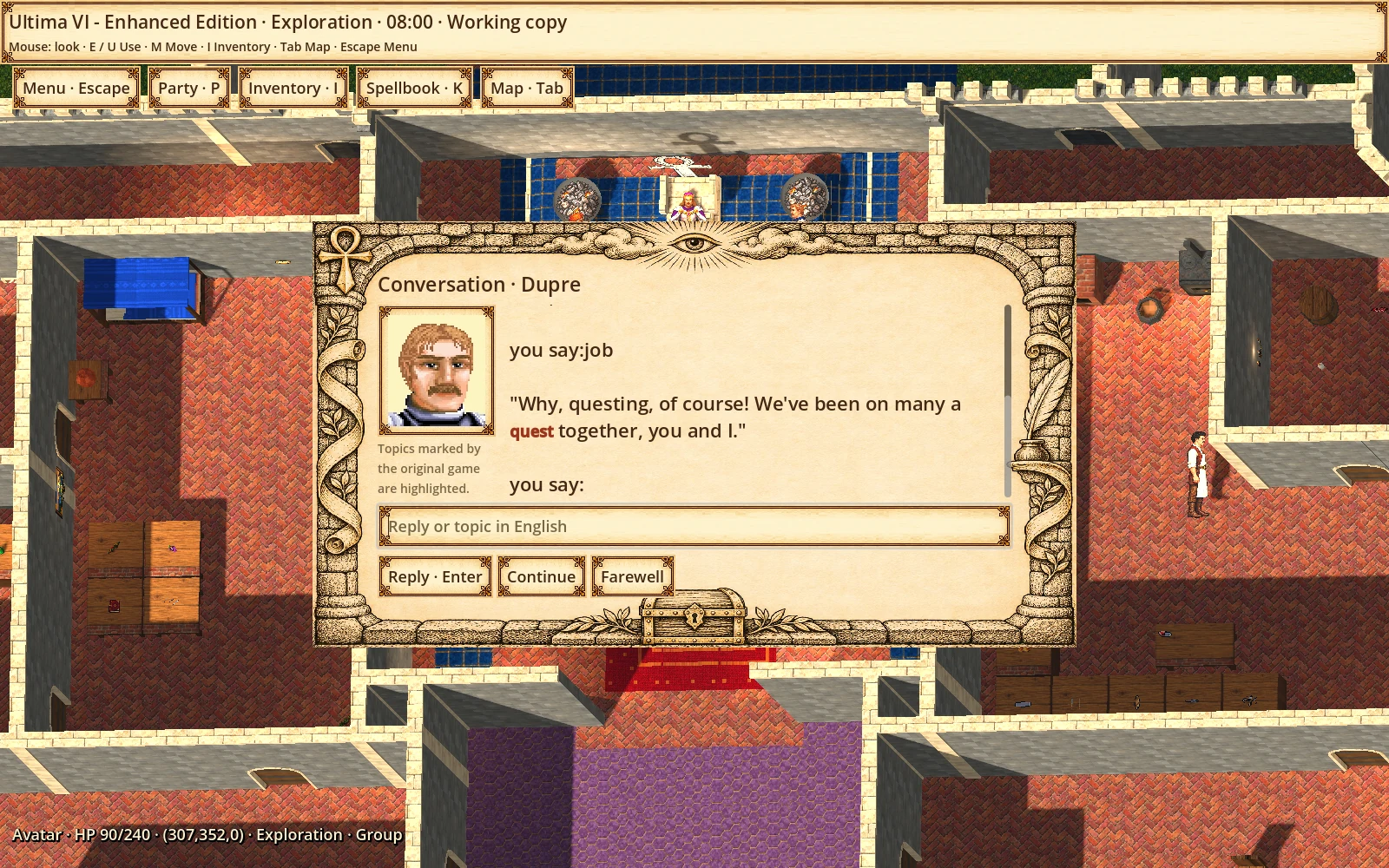
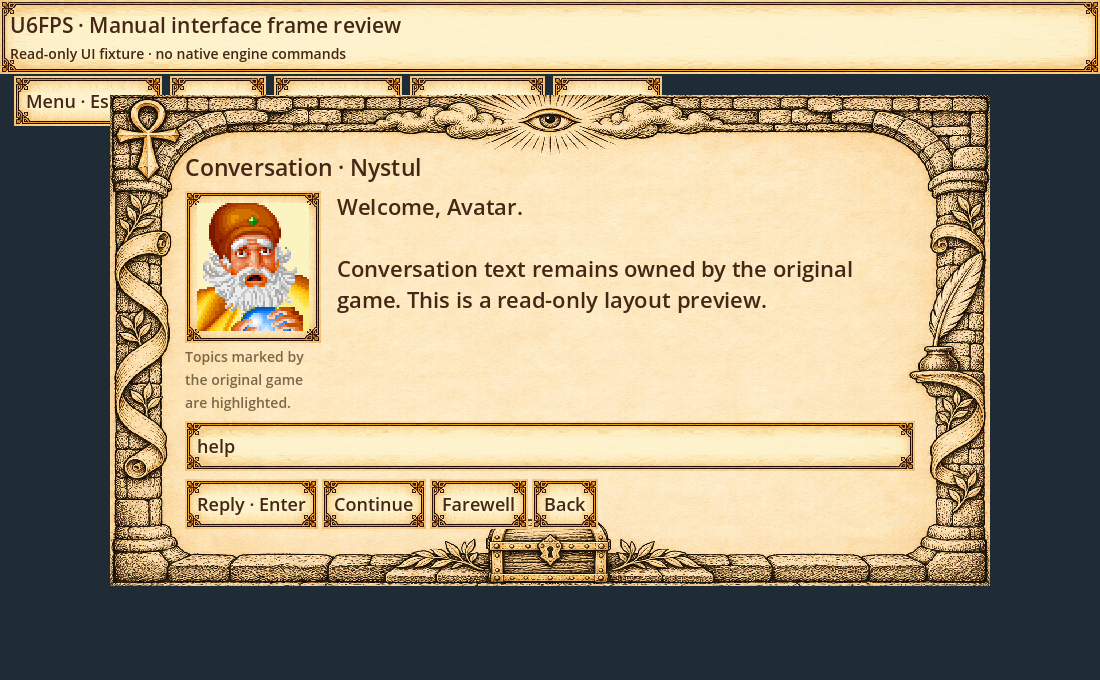
Dialogue portrait and keyword
Dialogue portrait and keywordConversation with Dupre: the original reply highlights quest and retains his portrait.
See 1 more visual example
Portuguese dialogue interface
Portuguese dialogue interfacePT-BR layout preview. Interface translation is separate from the original campaign text.
Inventory and party

More control over the adventure

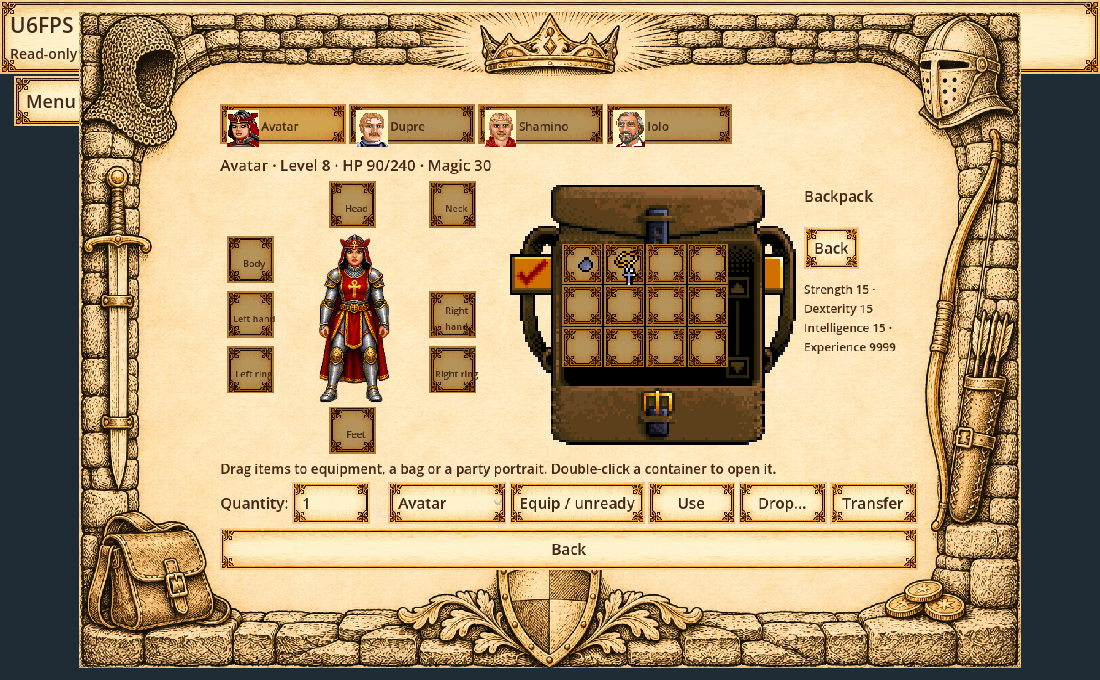
Visual backpack, item dragging, equipment and party-member selection.
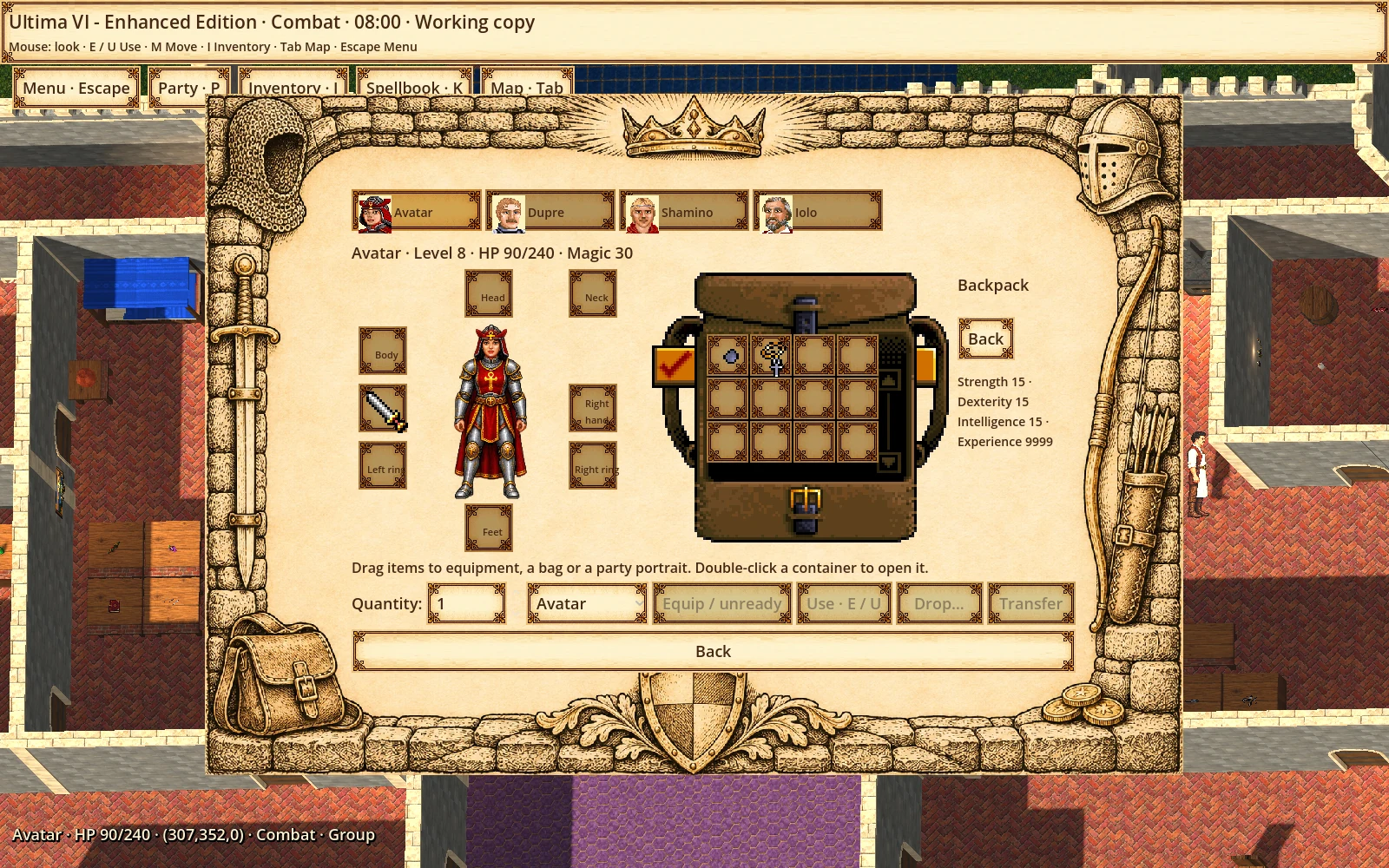
Visual backpack and equipment
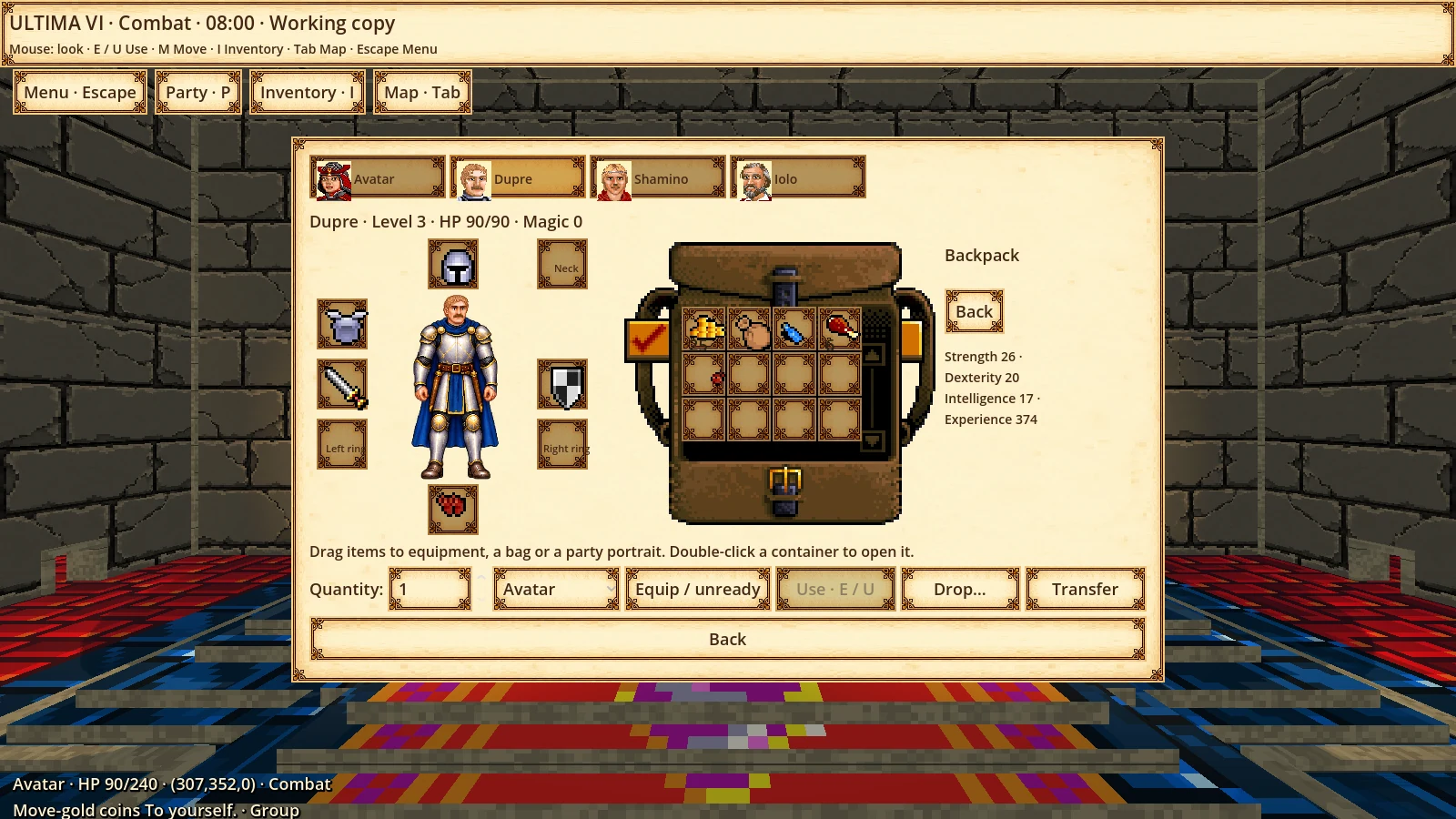
Visual backpack and equipmentInventory with original items, equipment slots and backpack, opened in the test session.
See 2 more visual examples
Dragging items
Dragging itemsEarlier capture from the inventory drag-and-drop test.
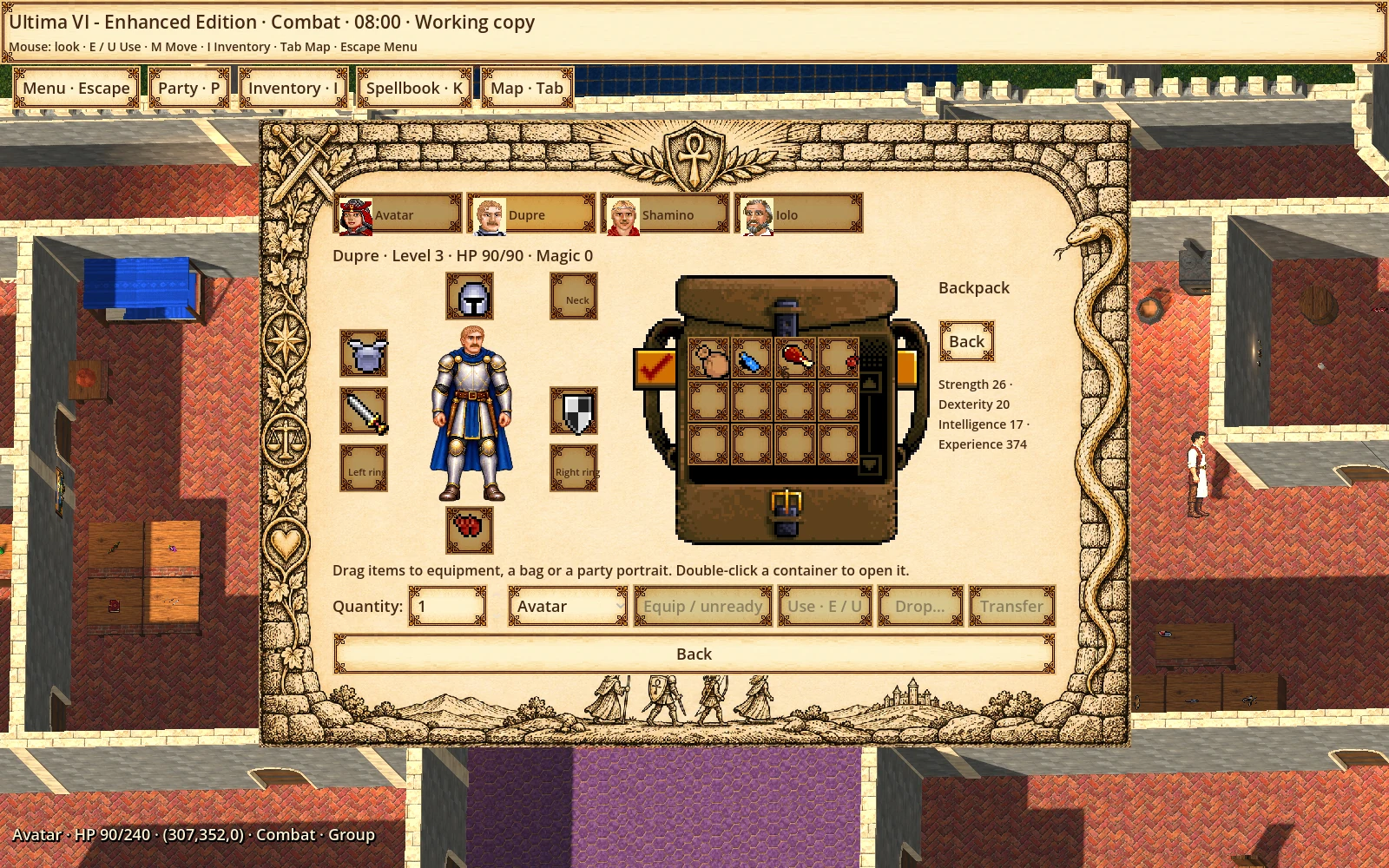
Visual party selection
Visual party selectionDupre selected in the party window; portraits and equipment are accessible in the interface.
Interactions and magic

Adapting the original rules

Doors, containers, lights and tools, plus an expanding selection of original spells.
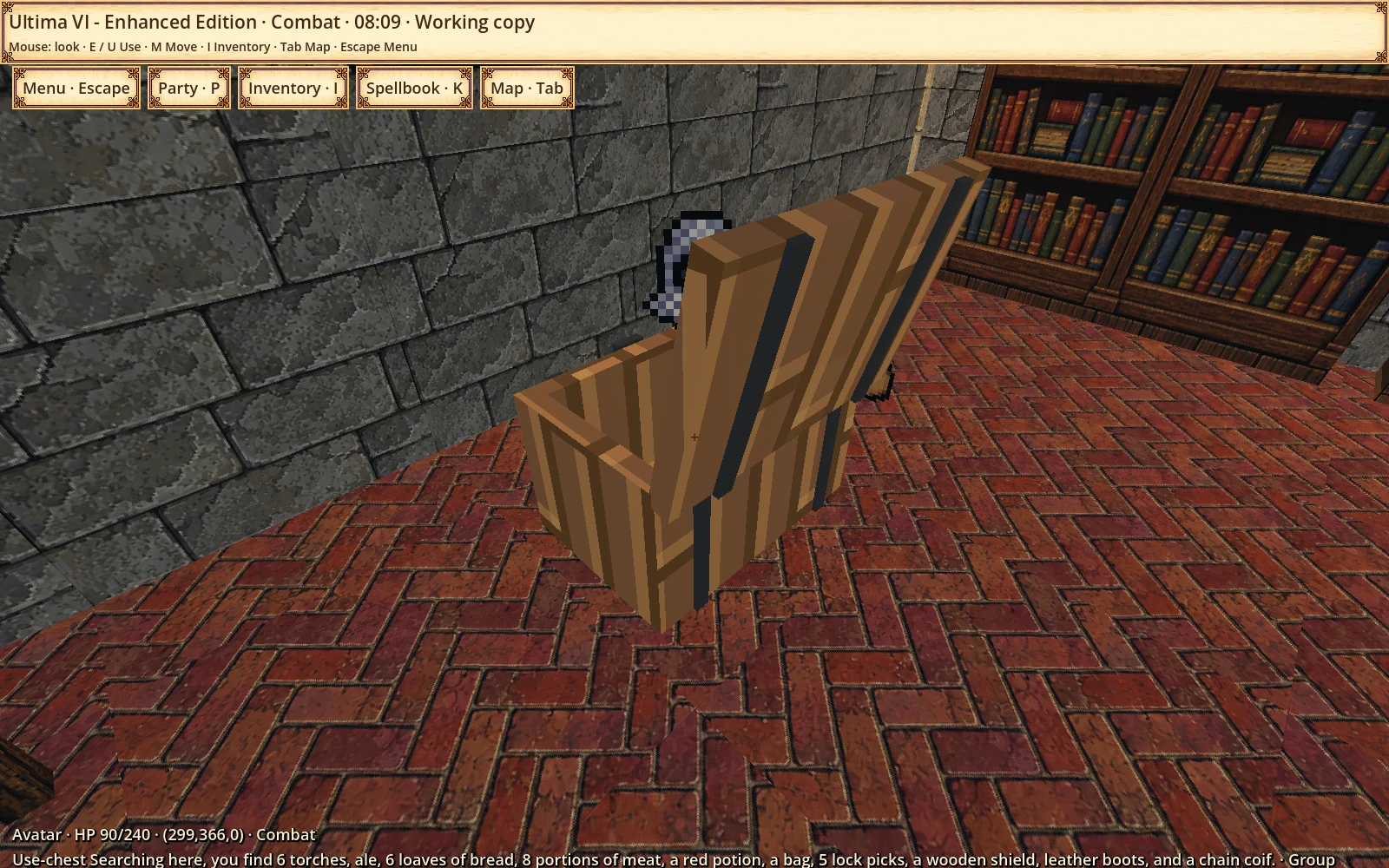
Opening a chest
Opening a chestChest opened through Use, with the original game search result.
See 15 more visual examples
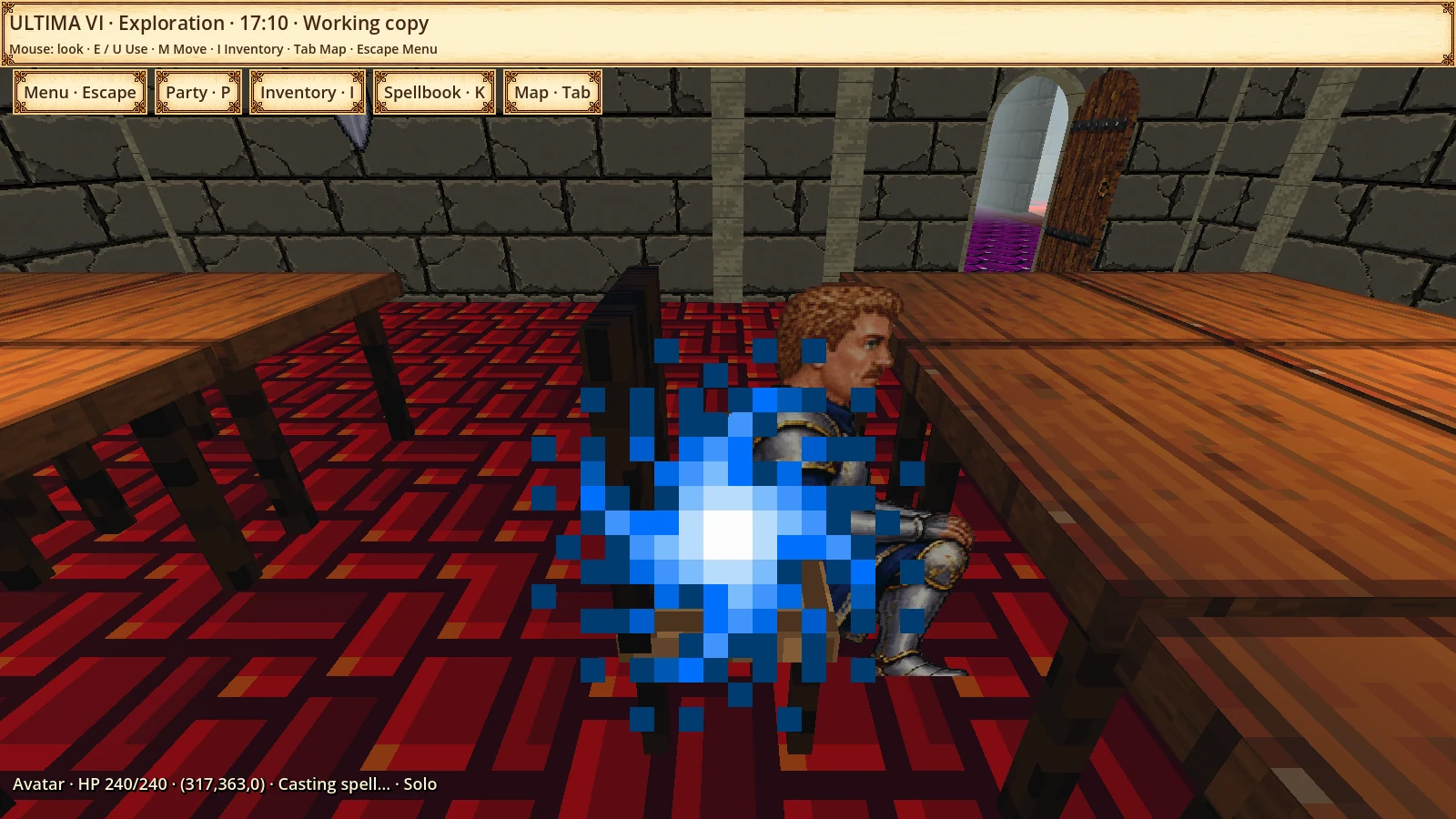
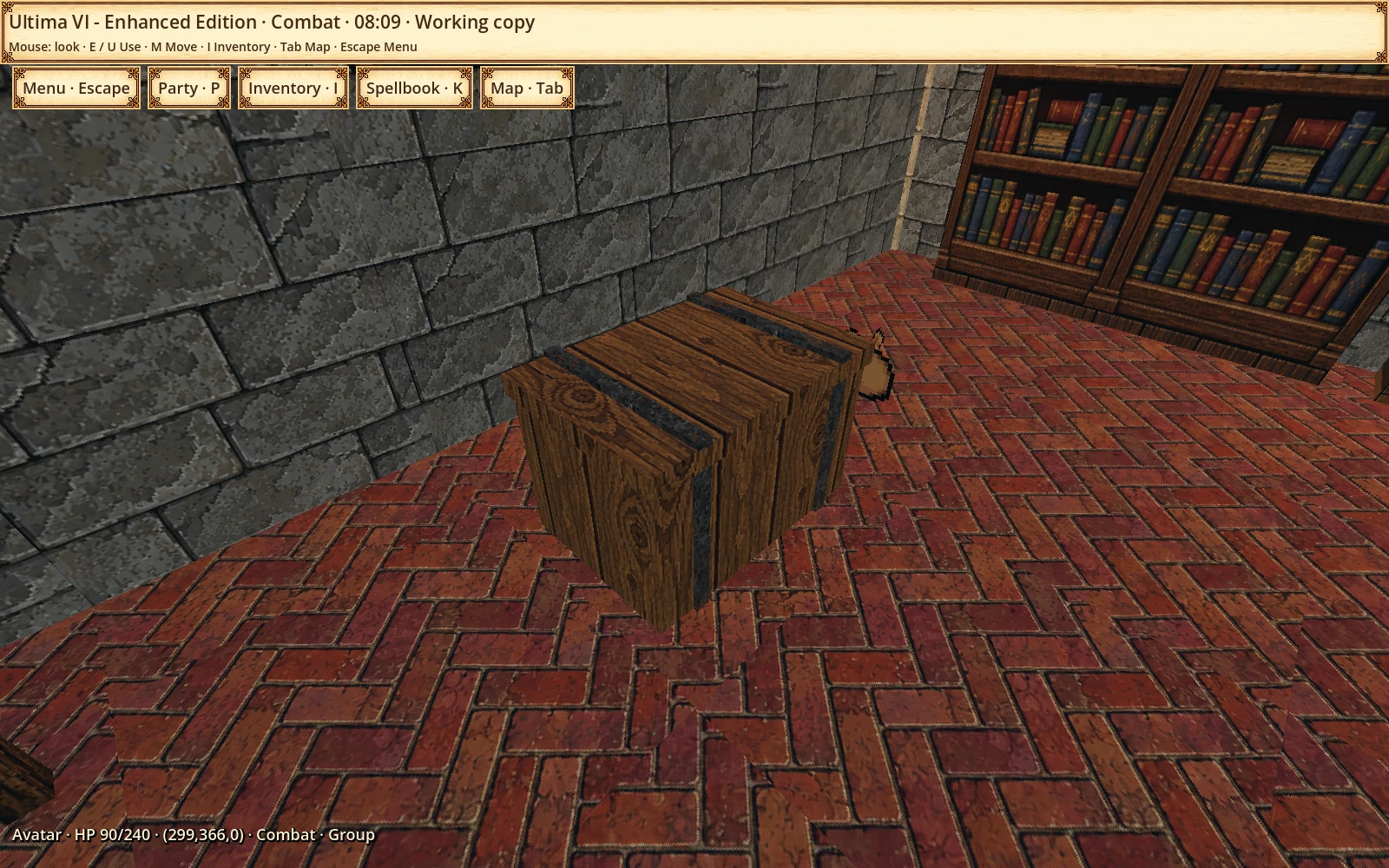
Chest before interaction
Chest before interactionThe same chest closed before the original interaction.
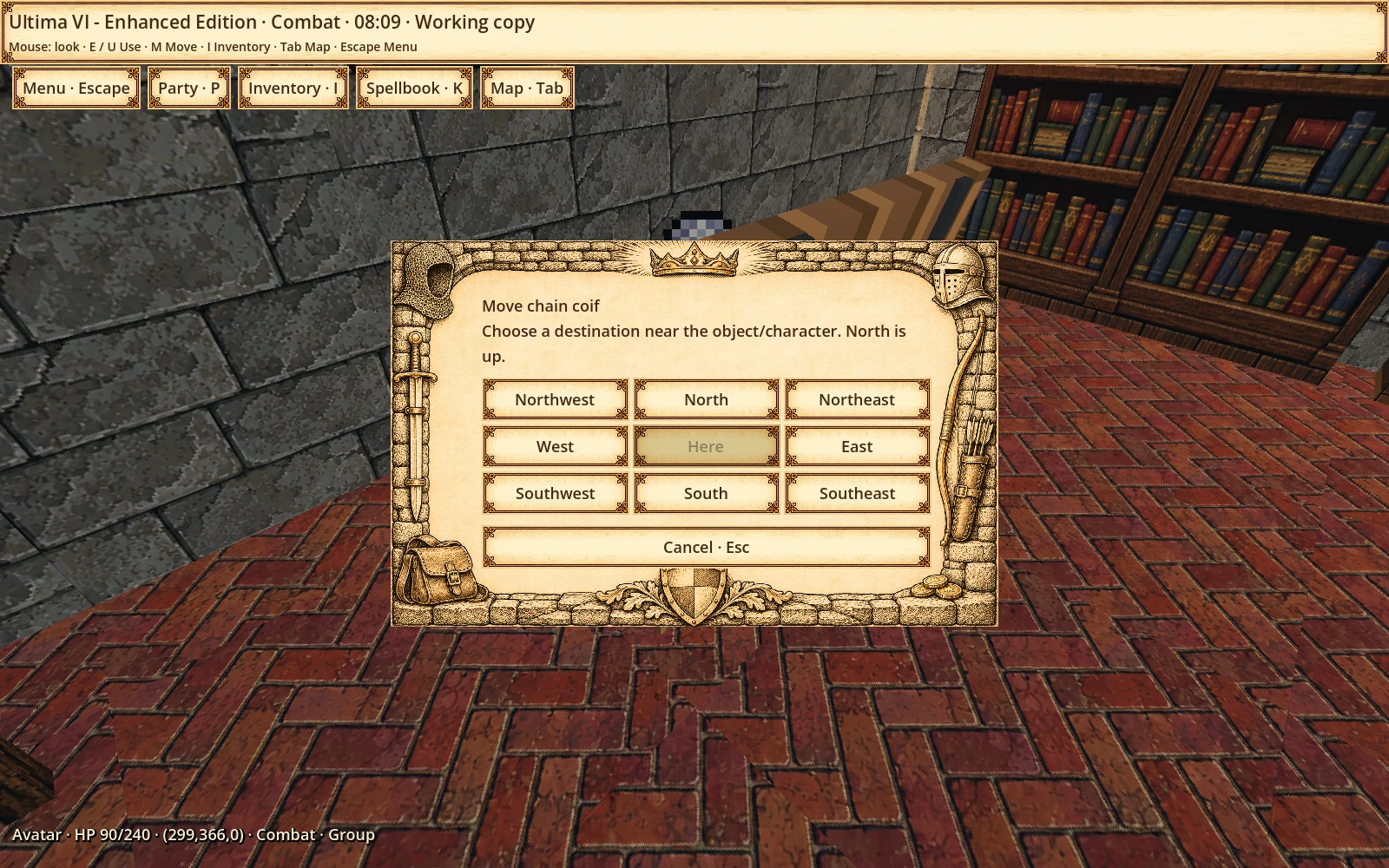
Choosing where to move
Choosing where to moveM opens the nearby destination choice for the selected object.
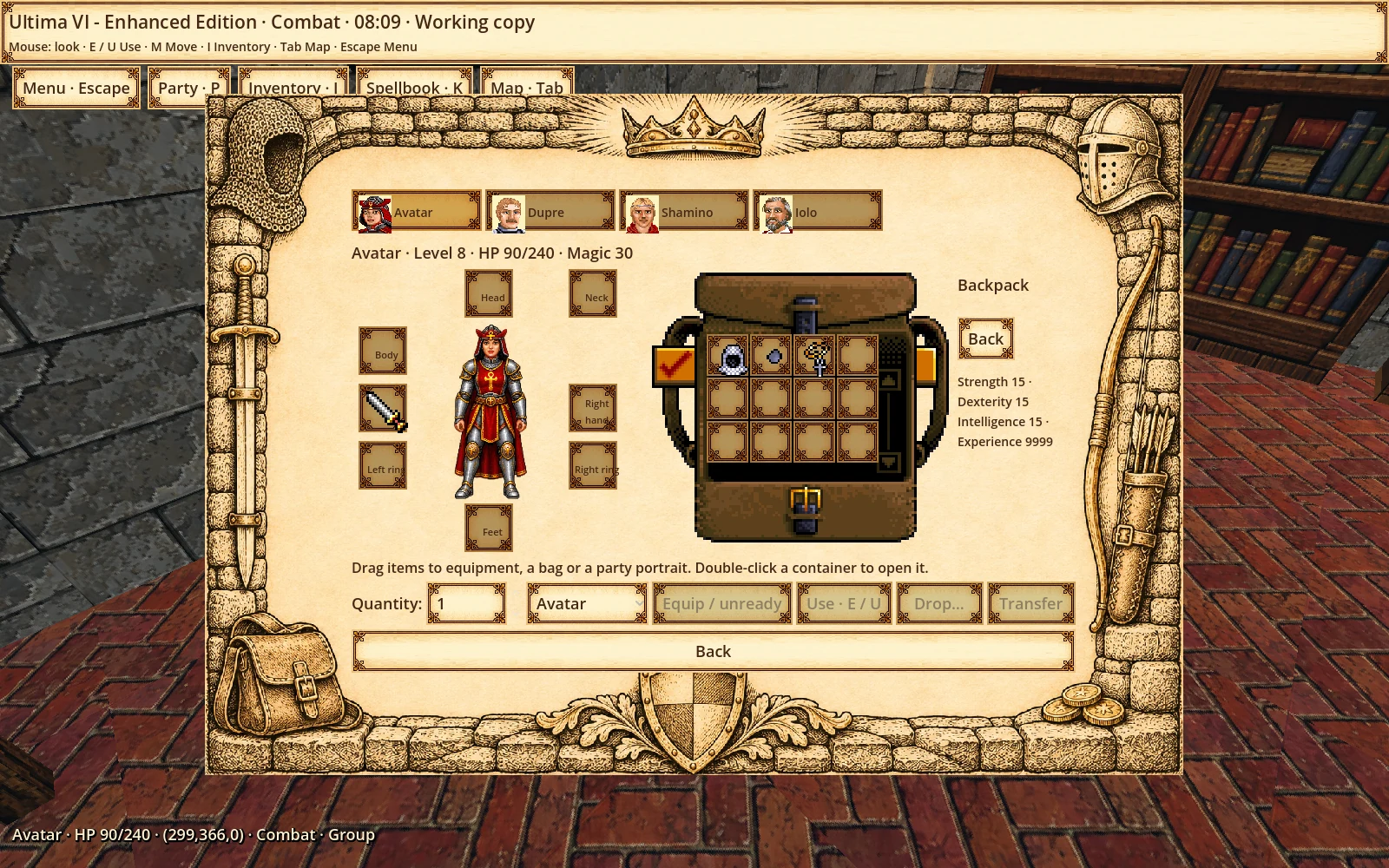
Picking up an object
Picking up an objectInventory after picking up the original chest item in the test session.
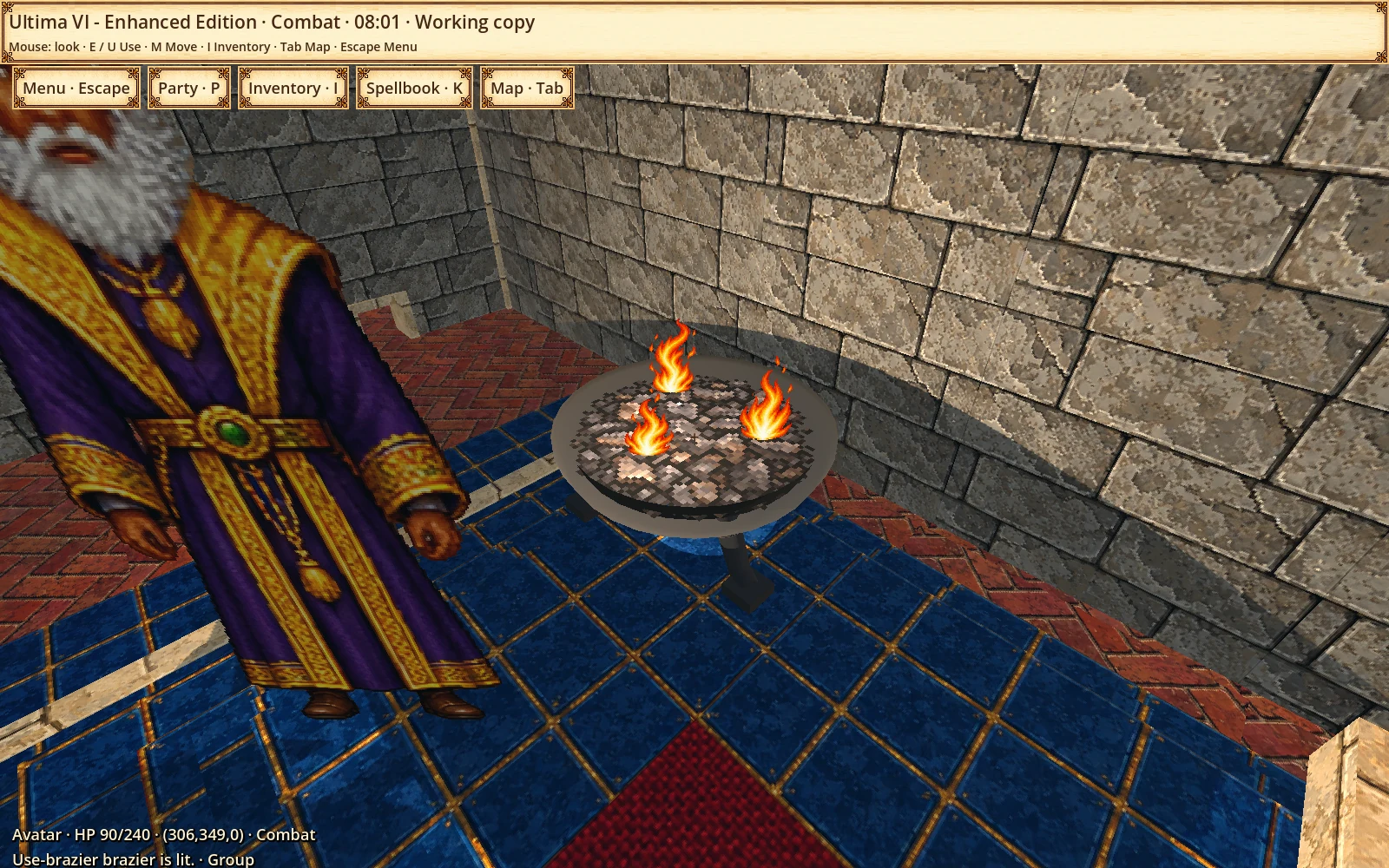
Lit light source
Lit light sourceOriginal light source before the Use interaction.
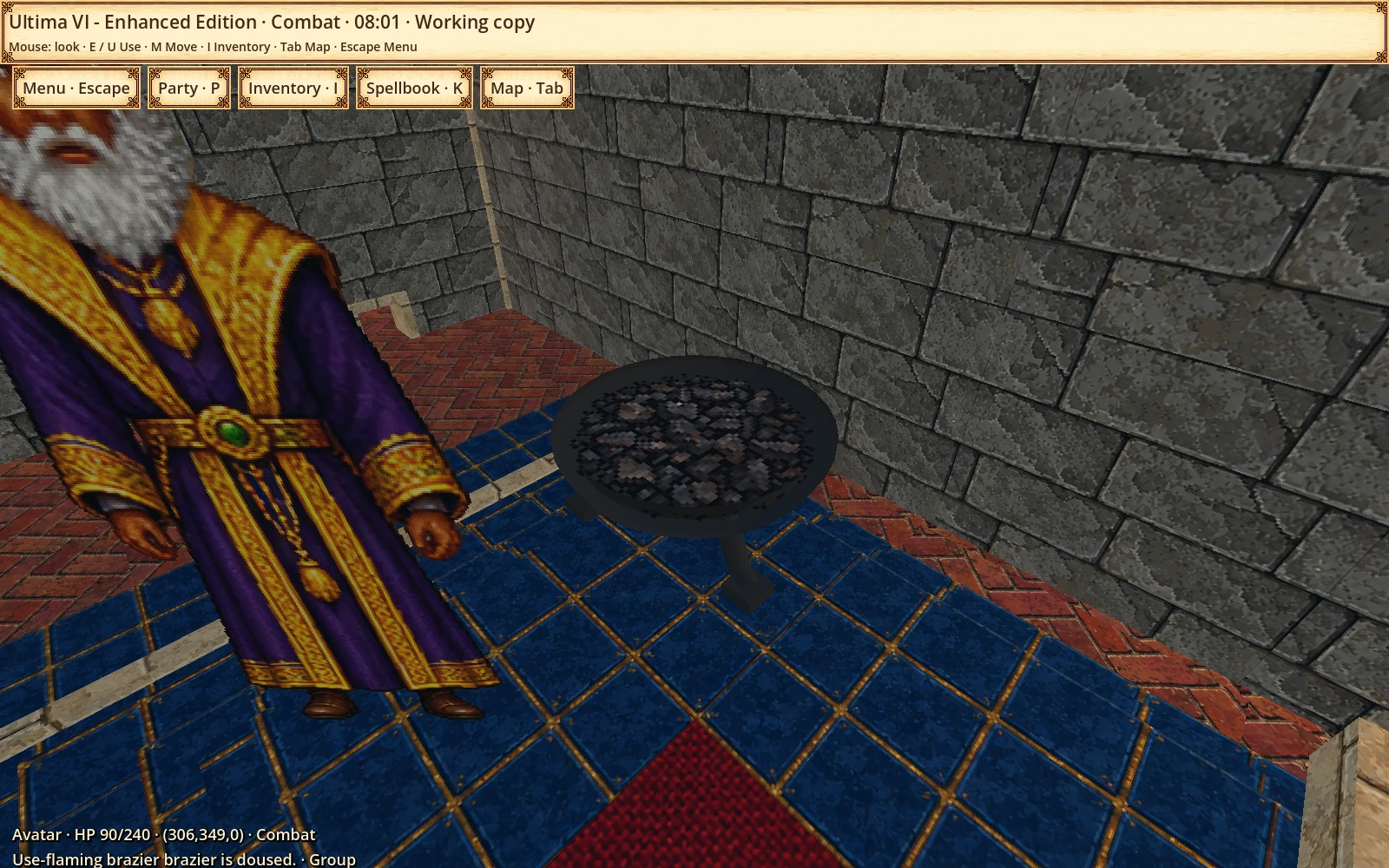
Extinguishing a light source
Extinguishing a light sourceThe same light source extinguished through Use, with the native state change confirmed.
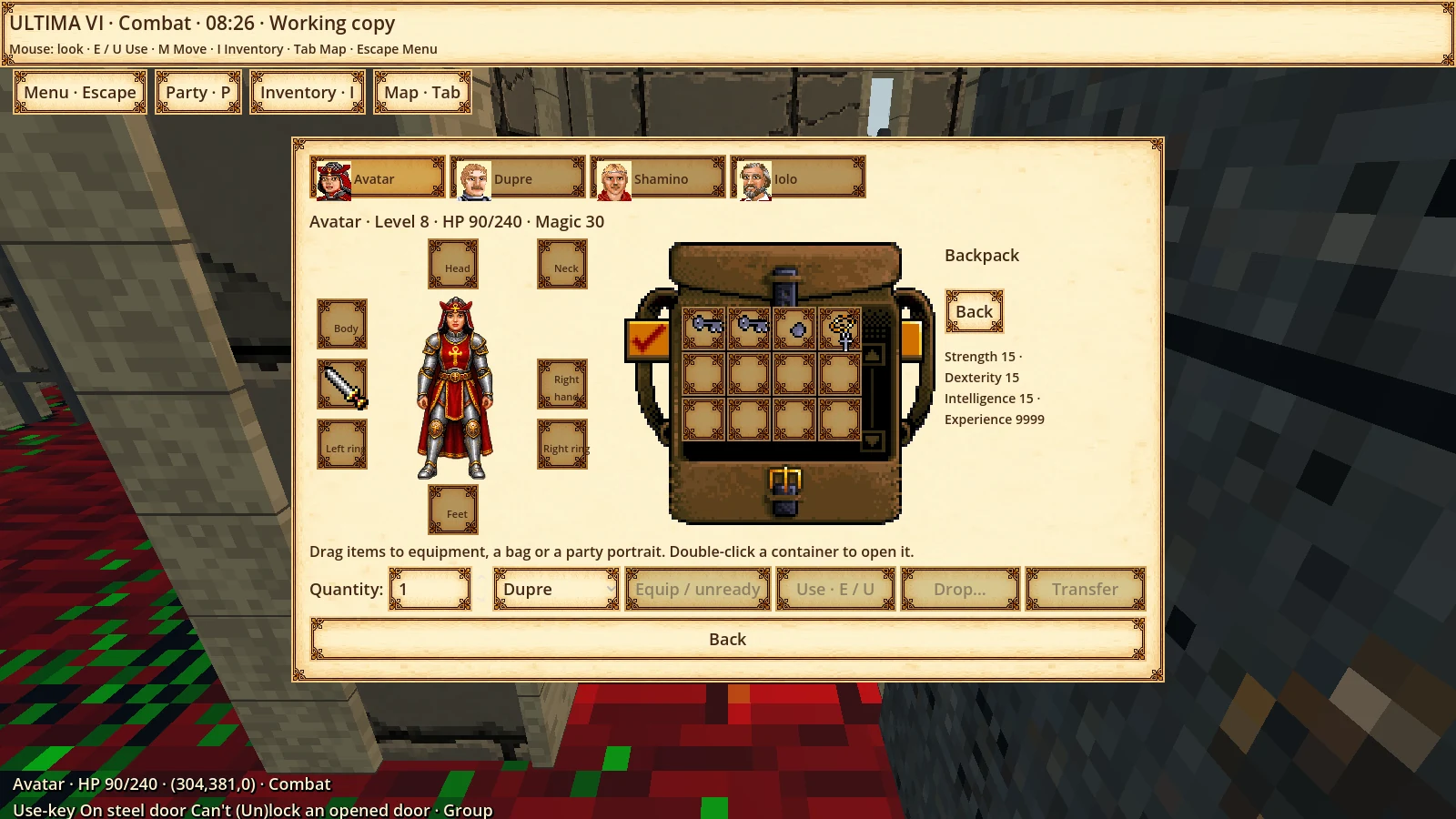
Key and world target
Key and world targetEarlier alpha capture: result of using a key on a world target.
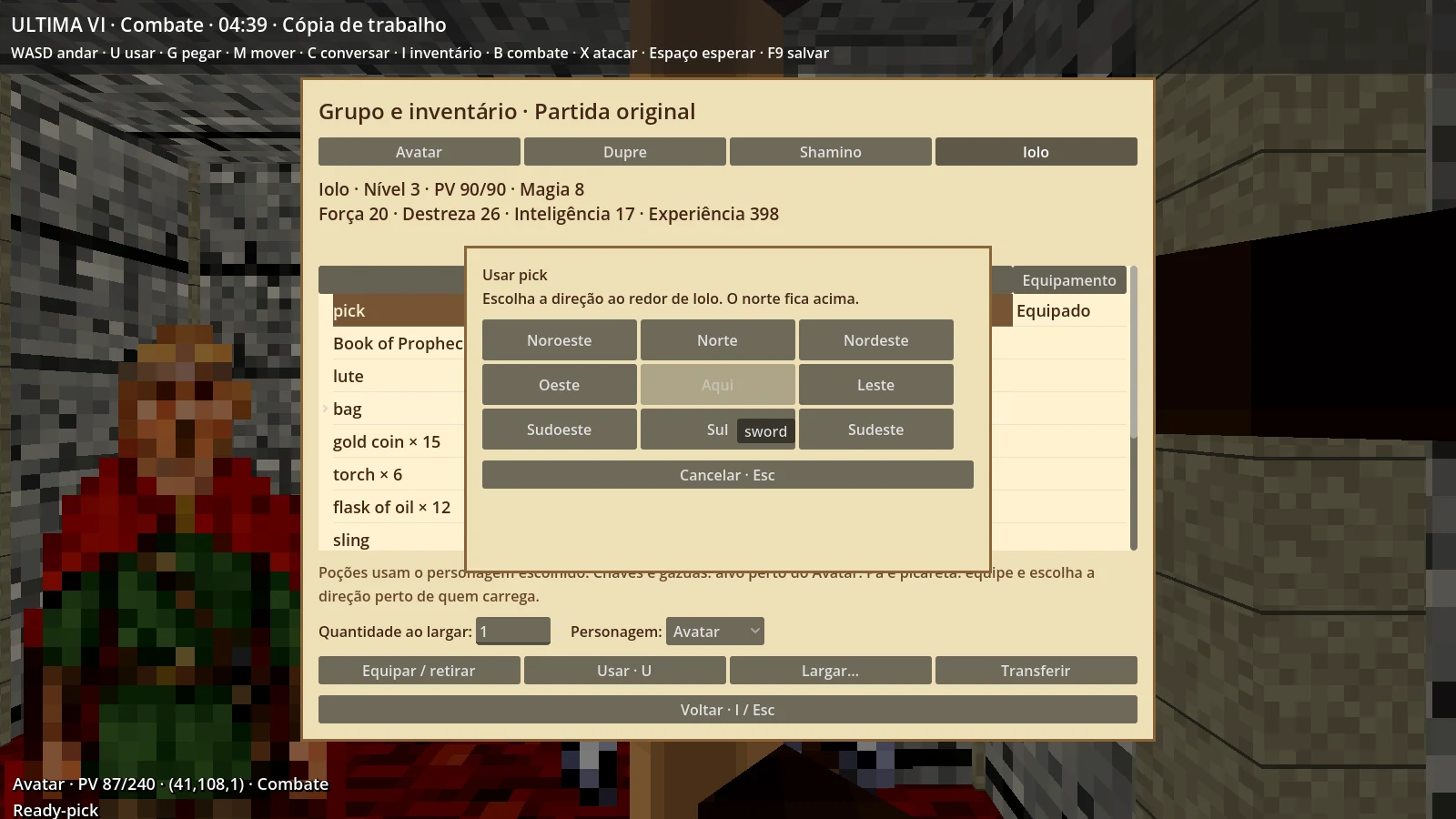
Tool direction
Tool directionEarlier alpha capture: choosing a direction when using an inventory tool.
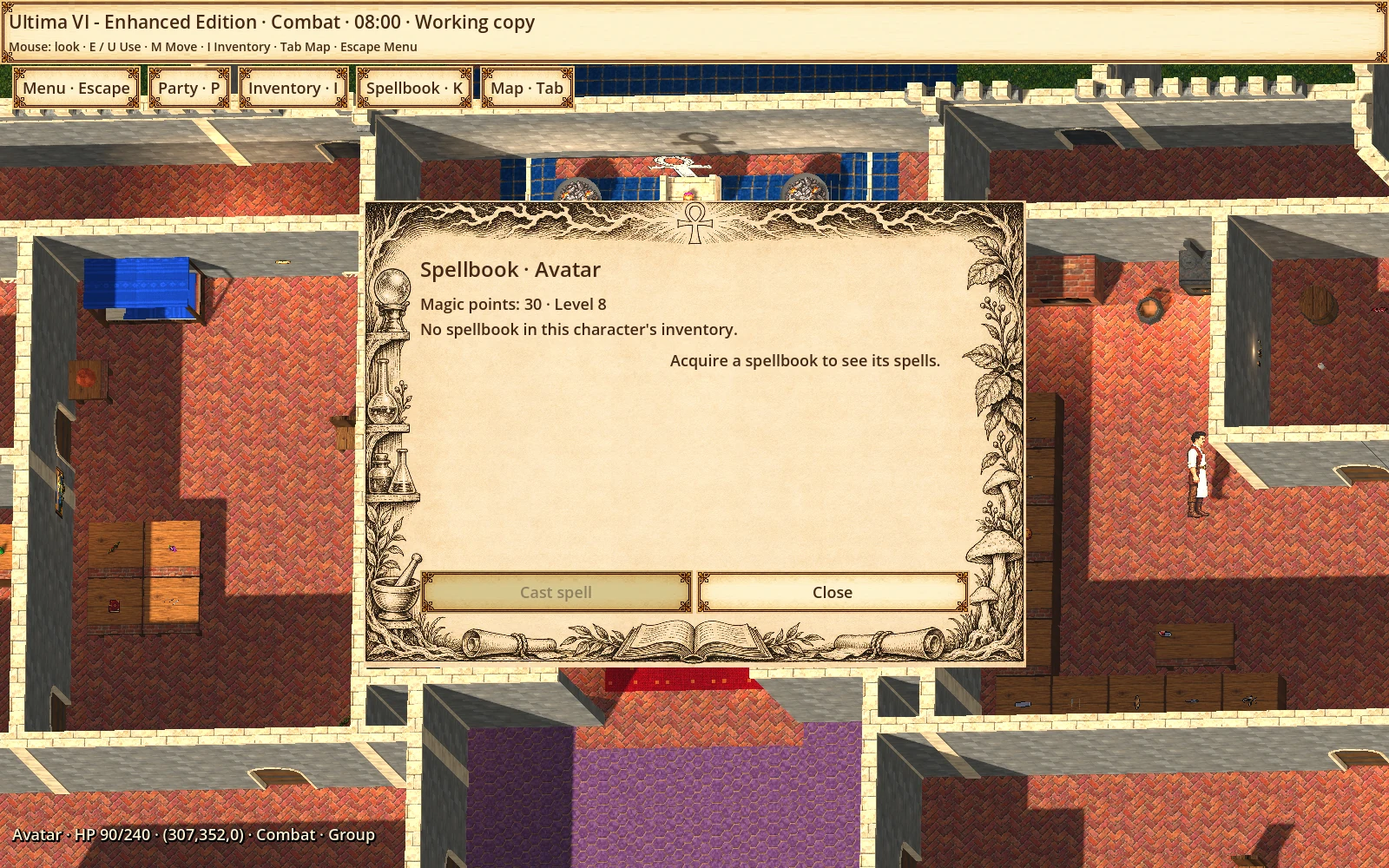
Spellbook and costs
Spellbook and costsSpellbook opened in the test session, with spell selection and caster information.
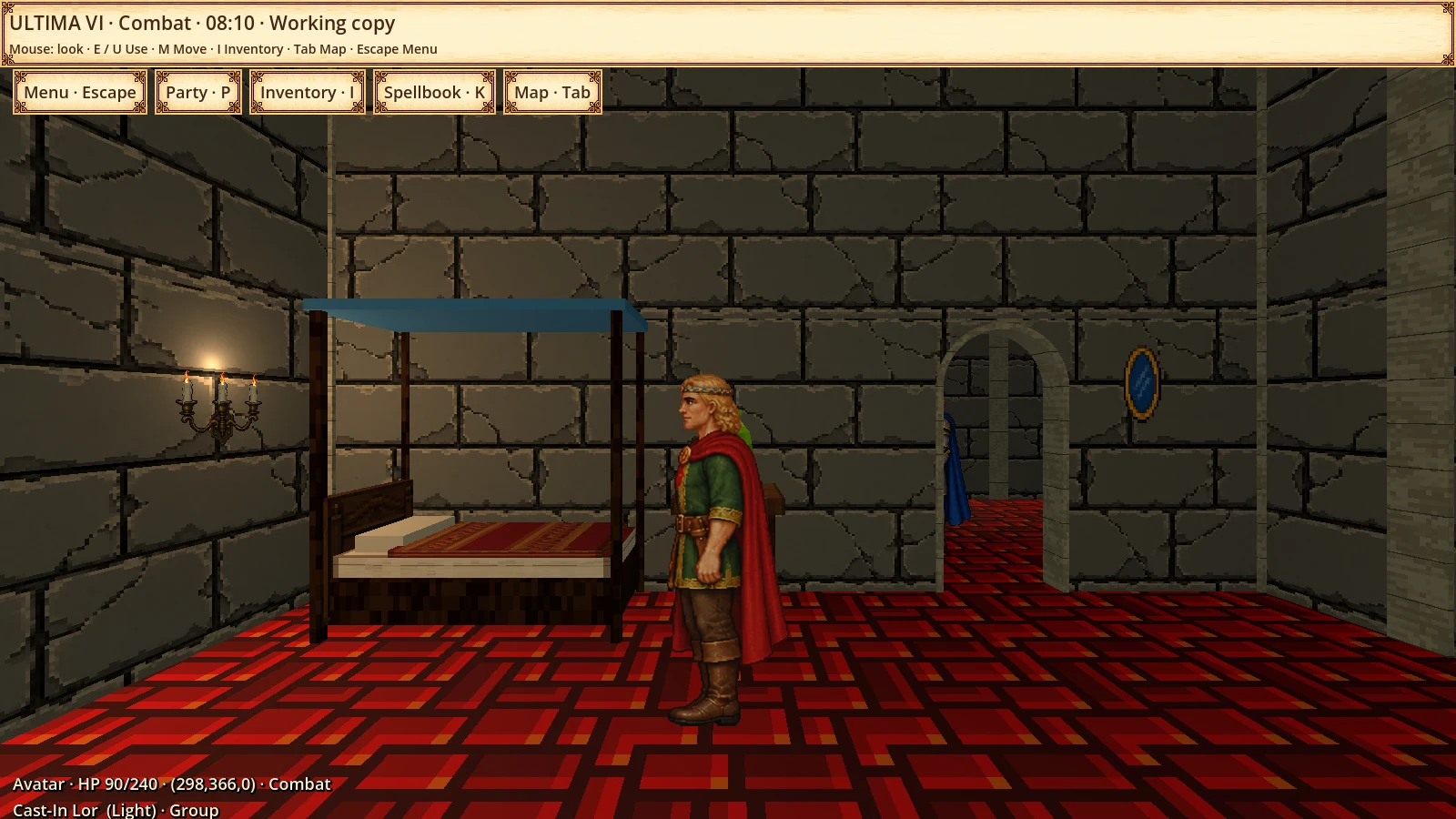
Light
LightEarlier capture of illumination after casting Light through the original engine.
Heal
HealRecorded example of Heal on an original target.
Ignite
IgniteEarlier capture: fire source lit by the original Ignite spell.
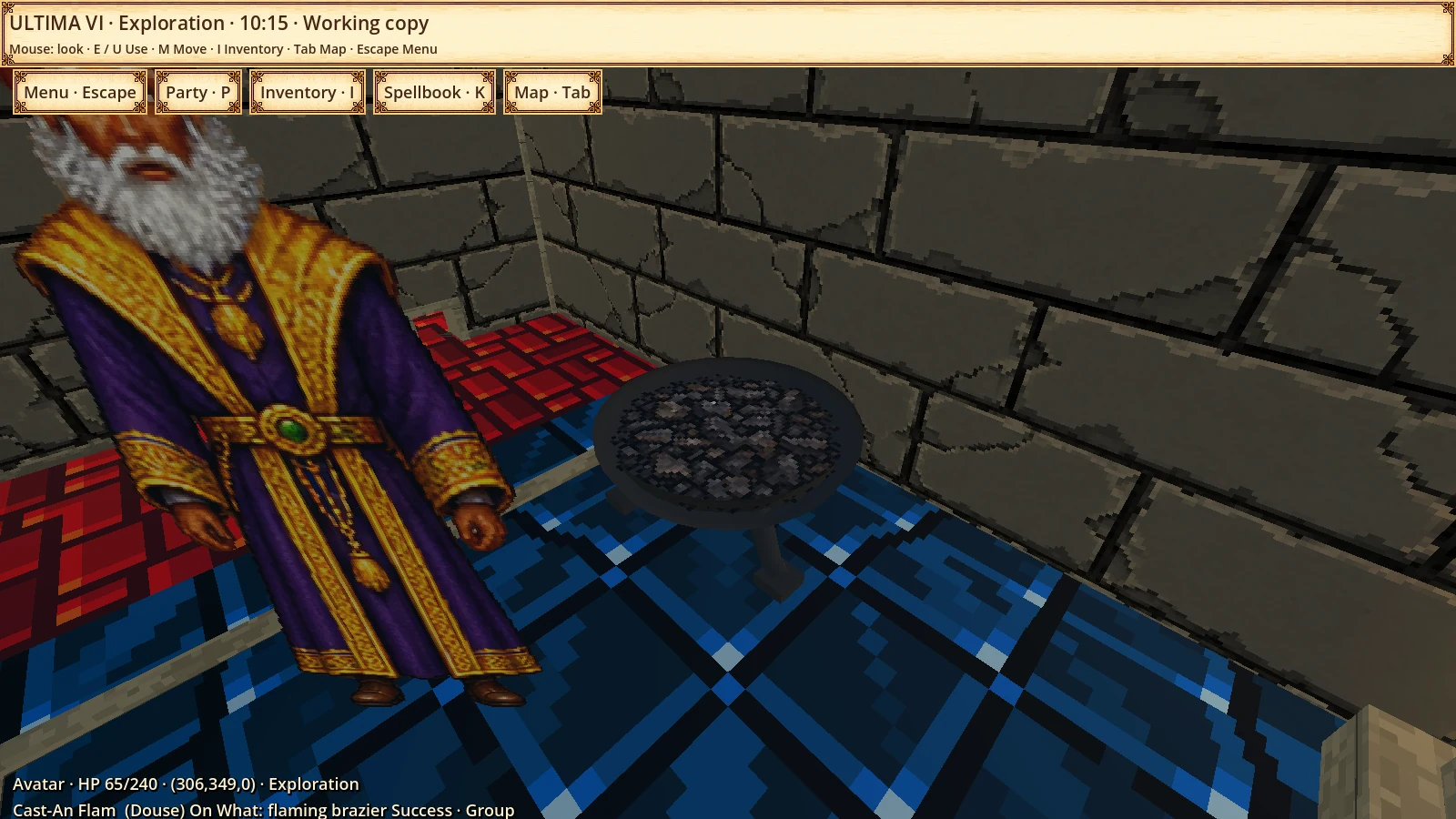
Douse
DouseEarlier capture: fire source extinguished by the original Douse spell.
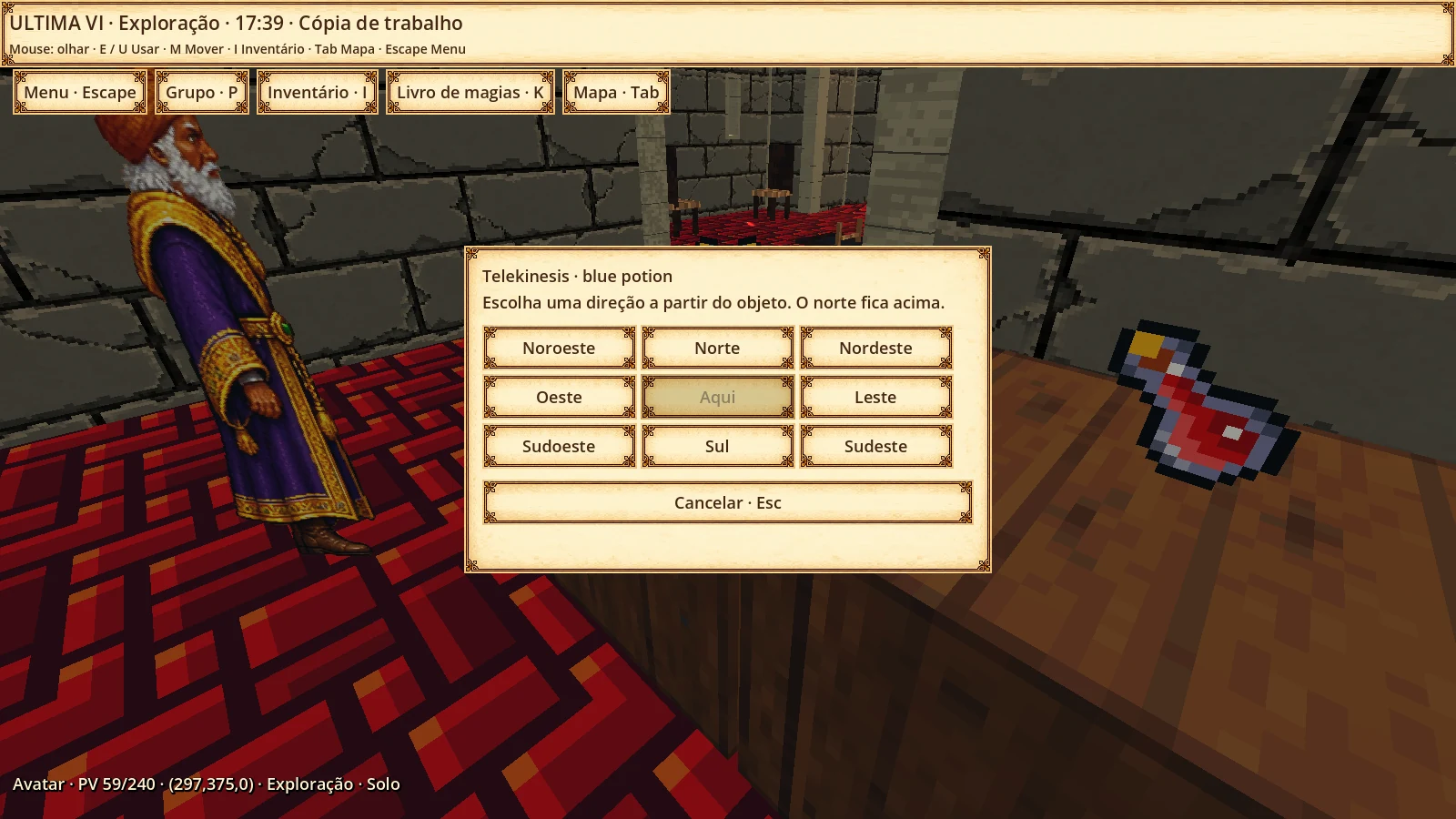
Telekinesis
TelekinesisDestination selection for moving an object with Telekinesis.
Help
HelpResult of returning to the castle through Help in an isolated original-engine test.
Locate
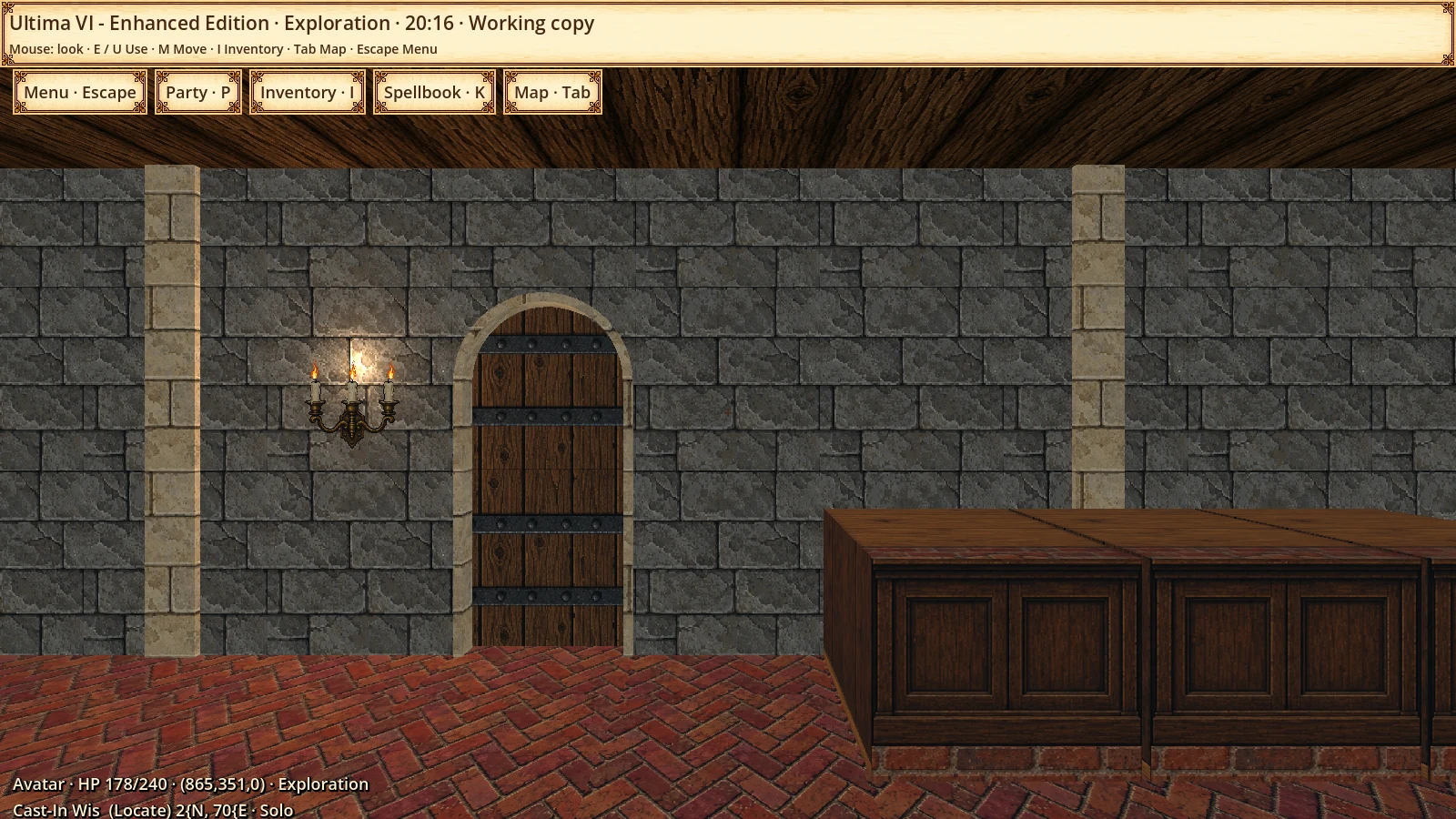
LocateLocate response with coordinates supplied by the original game.
Interfaces

Frames that suit the adventure

Complete frames themed around magic, inventory, dialogue, party and maps.

Visual backpack and equipment
Visual backpack and equipmentInventory with original items, equipment slots and backpack, opened in the test session.
See 5 more visual examples
Dialogue portrait and keyword
Dialogue portrait and keywordConversation with Dupre: the original reply highlights quest and retains his portrait.
Spellbook and costs
Spellbook and costsSpellbook opened in the test session, with spell selection and caster information.
Visual party selection
Visual party selectionDupre selected in the party window; portraits and equipment are accessible in the interface.
Map and travel frame
Map and travel frameLocal map of the castle and its surroundings in the travel interface.
Profiles, camera and free movement
Profiles, camera and free movementIndependent presentation and movement options without starting another game.
World and options

More ways to customise

Terrain relief, architectural detail and optional crossed-plane vegetation.

Banks following the original terrain
Banks following the original terrainExample of adapted banks following the native tile contours.
See 2 more visual examples
Roads and materials
Roads and materialsExample of the revised road material in the Skara Brae area.
Crossed-plane vegetation
Crossed-plane vegetationExample of the crossed-surface option applied to Renewed vegetation. Presentation scene.
Saved games

Saving under your control

Manual saving; automatic saves on transitions, portals and normal exit, subject to the engine.

Manual save confirmed
Manual save confirmedThe lower message confirms Nuvie saved the test copy. Automatic transition saves retain their own rules.
See 1 more visual example
Grid movement selected
Grid movement selectedThe same menu with Grid selected; the manual save button remains available.

Quality-of-life improvements and original interactions

The adaptation already includes a visual backpack, item icons, dragging to organise or equip, direct party-member selection, portrait-and-keyword dialogue, remappable controls and interface language options. Manual saving remains available; walking autosaves were removed in favour of the intended transitions.

Visual backpack and equipment
Visual backpack and equipmentInventory with original items, equipment slots and backpack, opened in the test session.
See 4 more visual examples
Dialogue portrait and keyword
Dialogue portrait and keywordConversation with Dupre: the original reply highlights quest and retains his portrait.
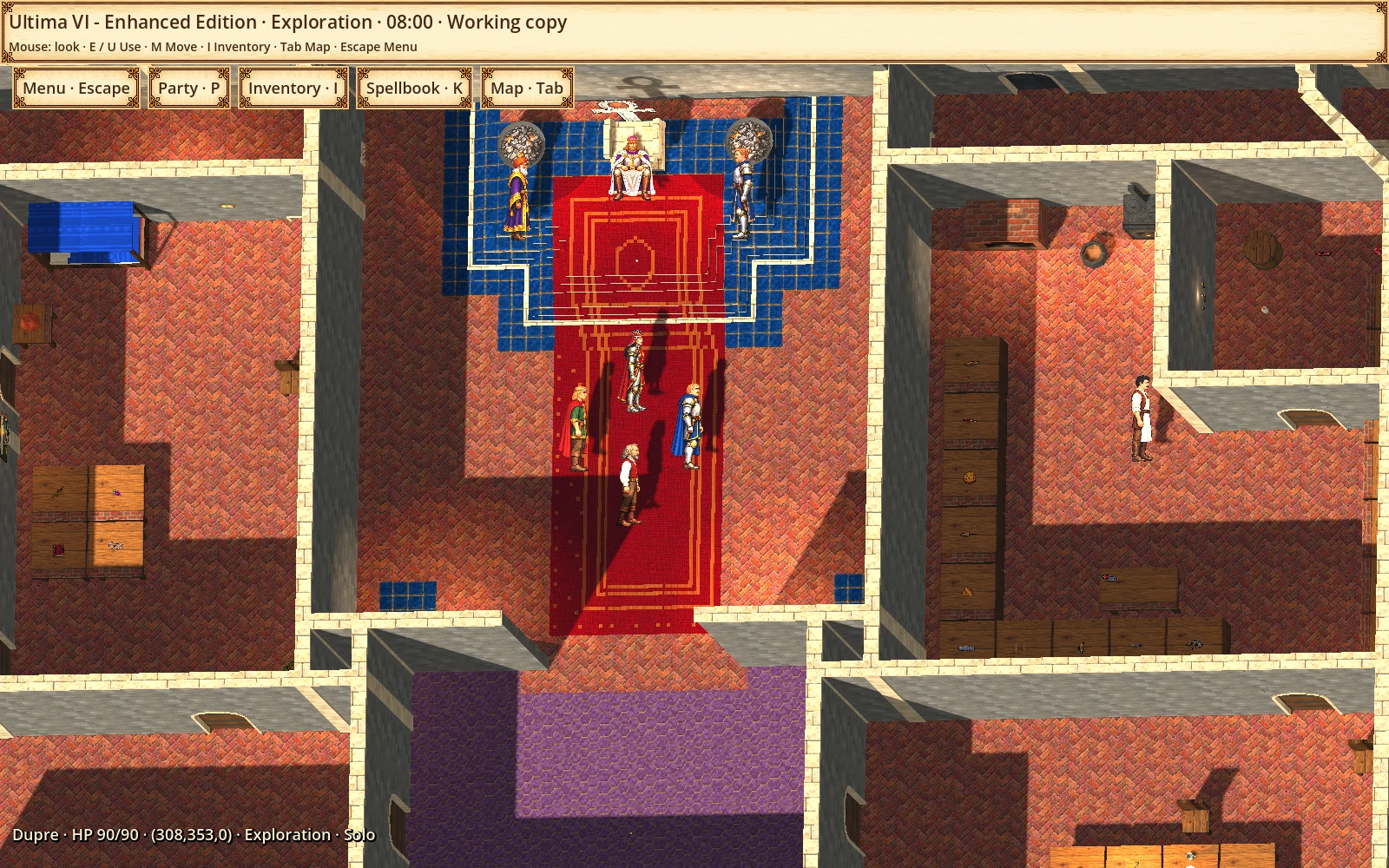
Direct control of Dupre
Direct control of DupreThe lower indicator identifies Dupre as the controlled character in solo mode, confirmed by the original engine.
Remap movement and interactions
Remap movement and interactionsCurrent controls window with remappable movement, Use and other actions.
Manual save confirmed
Manual save confirmedThe lower message confirms Nuvie saved the test copy. Automatic transition saves retain their own rules.

Doors, containers, lights, keys and tools are among the interactions already connected. The spellbook brings together a growing selection of original spells, including Light, Heal, Ignite, Douse, Telekinesis, Help and Locate. The original engine retains authority over costs, permissions and outcomes.

Opening a chest
Opening a chestChest opened through Use, with the original game search result.
See 15 more visual examples
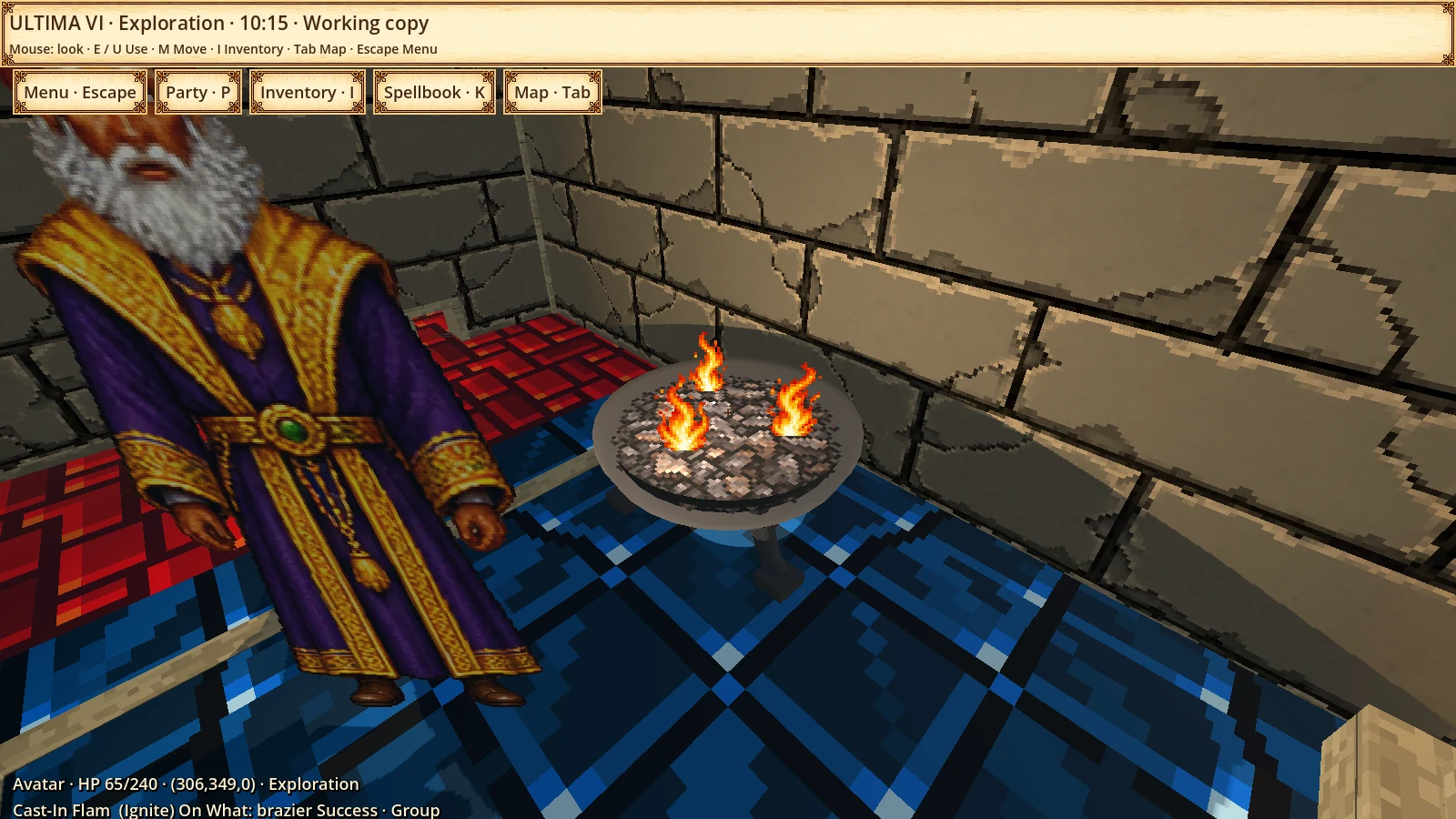
Chest before interaction
Chest before interactionThe same chest closed before the original interaction.
Choosing where to move
Choosing where to moveM opens the nearby destination choice for the selected object.
Picking up an object
Picking up an objectInventory after picking up the original chest item in the test session.
Lit light source
Lit light sourceOriginal light source before the Use interaction.
Extinguishing a light source
Extinguishing a light sourceThe same light source extinguished through Use, with the native state change confirmed.
Key and world target
Key and world targetEarlier alpha capture: result of using a key on a world target.
Tool direction
Tool directionEarlier alpha capture: choosing a direction when using an inventory tool.
Spellbook and costs
Spellbook and costsSpellbook opened in the test session, with spell selection and caster information.
Light
LightEarlier capture of illumination after casting Light through the original engine.
Heal
HealRecorded example of Heal on an original target.
Ignite
IgniteEarlier capture: fire source lit by the original Ignite spell.
Douse
DouseEarlier capture: fire source extinguished by the original Douse spell.
Telekinesis
TelekinesisDestination selection for moving an object with Telekinesis.
Help
HelpResult of returning to the castle through Help in an isolated original-engine test.
Locate
LocateLocate response with coordinates supplied by the original game.

Windows also have complete frames themed for their context: magic, inventory, dialogue, party and maps. The parchment artwork draws on the world of the manual, with content and controls fitted to the available space.

Visual backpack and equipment
Visual backpack and equipmentInventory with original items, equipment slots and backpack, opened in the test session.
See 5 more visual examples
Dialogue portrait and keyword
Dialogue portrait and keywordConversation with Dupre: the original reply highlights quest and retains his portrait.
Spellbook and costs
Spellbook and costsSpellbook opened in the test session, with spell selection and caster information.
Visual party selection
Visual party selectionDupre selected in the party window; portraits and equipment are accessible in the interface.
Map and travel frame
Map and travel frameLocal map of the castle and its surroundings in the travel interface.
Profiles, camera and free movement
Profiles, camera and free movementIndependent presentation and movement options without starting another game.

Preserving the original, opening possibilities

Enhanced Edition describes the project’s direction: more ways to revisit Ultima VI, and a foundation that could support content expansions in the future. New adventures and expansion tools are possibilities to explore. This name change does not announce finished additional content, a mod editor or an expanded campaign.

Current map as a development reference
The foundation for the next stepsReference from the current foundation. Expansions and new adventures remain under consideration; this image does not show completed additional content.

A coherent adaptation of the original game remains the priority. Smooth movement, stability, artwork, interfaces and rule coverage are ongoing alpha work. This remains an independent, unofficial project in local development, without a public download at this stage. Alpha 0.2 is still being prepared; this announcement is not its release.

Map and travel frame
Map and travel frameLocal map of the castle and its surroundings in the travel interface.
See 2 more visual examples
Underground ladder
Underground ladderEarlier alpha capture in an underground area reached through the original engine.
Ultima VI oblique camera
Oblique · Ultima VIElevated view with nearly screen-aligned floors and visible wall faces. Capture from an original-engine test session.
FOLLOW THE JOURNEY

One person.
Many stories to tell.

Behind the scenes, discoveries and updates from a solo studio. From the first idea to the next world to explore.